Word Explanation
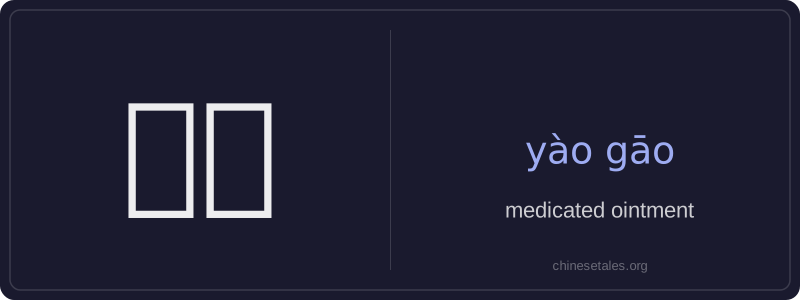
‘Yào gāo’ literally combines ‘yào’ (medicine, drug) and ‘gāo’ (paste, ointment, or salve), meaning a medicated topical preparation applied to the skin for therapeutic purposes. It is commonly used in both traditional Chinese medicine (e.g., herbal plasters for pain or inflammation) and modern Western-style pharmacy (e.g., antibiotic or steroid ointments). Unlike oral medications, yào gāo works locally — often spread on a cloth or directly onto affected areas like cuts, burns, muscle aches, or rashes.
This term emphasizes preparation form rather than specific ingredients: it can be herbal, synthetic, or hybrid, and may come as a thick paste, sticky plaster, or soft cream. In daily use, it’s often contrasted with oral drugs (yào wán or yào piàn) and liquid medicines (yào shuǐ). While ‘gāo’ alone can refer to sweet pastes (e.g., hú táo gāo), adding ‘yào’ clearly signals medicinal function and clinical intent.
Example Sentences
Related Words
国语
‘Guó yǔ’ literally means 'national language'—
面条
‘面条’ (miàn tiáo) literally means ‘flour str
无论谁
‘无论谁’ (wú lùn shéi) is a pronoun meaning
背后
背后 literally means 'back + behind' and functions
外语
‘外语’ literally means ‘outside language’ —
认为
‘认为’ (rèn wéi) is a transitive verb meaning
认同
‘认同’ (tóng rèn) is a verb meaning ‘to ident
中学
'Zhōngxué' literally combines 'zhōng' (middle)