Word Explanation
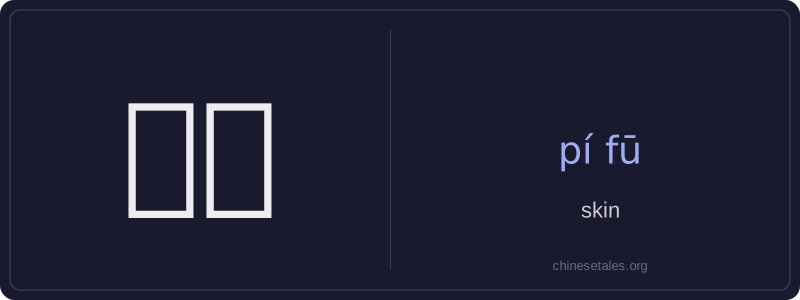
皮肤 (pí fū) is the standard, formal noun for 'skin' in Mandarin — the outer protective layer of the human body or animals. It’s a compound word formed by two characters with closely related meanings: 皮 (pí) originally meant 'animal hide' or 'leather' and carries connotations of surface and toughness; 肤 (fū) refers more specifically to the soft, living skin of humans and animals, often appearing in literary or medical contexts. Together, they create a balanced, neutral term used across everyday speech, healthcare, cosmetics, and biology.
The word is uncountable and doesn’t take measure words in general usage (e.g., you say 我的皮肤, not *一皮肤). It commonly appears in phrases like 皮肤干燥 (dry skin), 皮肤过敏 (skin allergy), or 皮肤病 (skin disease). While 皮 alone can mean 'skin' in casual or idiomatic expressions (e.g., 鸡皮疙瘩 'goosebumps'), 皮肤 is preferred when clarity, formality, or precision is needed — especially in health-related communication.
Example Sentences
Related Words
国语
‘Guó yǔ’ literally means 'national language'—
面条
‘面条’ (miàn tiáo) literally means ‘flour str
无论谁
‘无论谁’ (wú lùn shéi) is a pronoun meaning
背后
背后 literally means 'back + behind' and functions
外语
‘外语’ literally means ‘outside language’ —
认为
‘认为’ (rèn wéi) is a transitive verb meaning
认同
‘认同’ (tóng rèn) is a verb meaning ‘to ident
中学
'Zhōngxué' literally combines 'zhōng' (middle)