Word Explanation
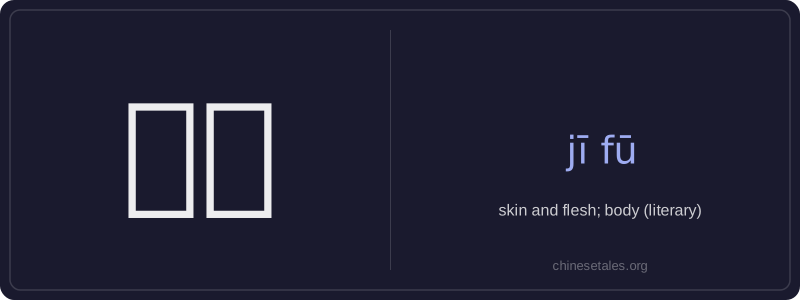
肌肤 literally combines 肌 (jī), meaning 'muscle' or 'flesh', and 肤 (fū), meaning 'skin'. Together, they form a literary or refined term for 'skin and flesh' — often used to refer to the human body’s outer surface as a whole, especially in contexts emphasizing texture, appearance, health, or sensitivity. Unlike the more common word 皮肤 (pí fū), which is neutral and everyday, 肌肤 carries a poetic, elegant, or descriptive tone, frequently appearing in literature, cosmetics advertising, traditional medicine, and formal descriptions of physical condition.
This compound is almost exclusively used for humans (not animals or objects) and rarely appears in casual speech. It often evokes imagery related to softness, smoothness, youth, or vulnerability — for example, describing delicate or aging skin, or expressing tenderness toward someone’s body. Because both characters share the same pronunciation (jī fū) and are semantically close, the word functions as a reduplicative compound reinforcing the concept rather than adding distinct meanings.
Example Sentences
Related Words
国语
‘Guó yǔ’ literally means 'national language'—
面条
‘面条’ (miàn tiáo) literally means ‘flour str
无论谁
‘无论谁’ (wú lùn shéi) is a pronoun meaning
背后
背后 literally means 'back + behind' and functions
外语
‘外语’ literally means ‘outside language’ —
认为
‘认为’ (rèn wéi) is a transitive verb meaning
认同
‘认同’ (tóng rèn) is a verb meaning ‘to ident
不对
不对 (bù duì) literally combines 不 (bù), meani