Word Explanation
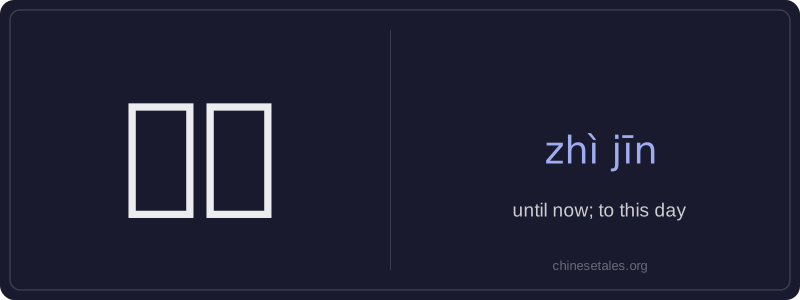
'Zhì jīn' literally combines 'zhì' (to reach, up to) and 'jīn' (now, present), forming an adverb meaning 'until now' or 'to this day'. It emphasizes continuity from some past point—often unspecified or previously mentioned—up through the present moment. It is commonly used in both spoken and written Chinese, especially in formal or narrative contexts, to highlight that a situation, fact, or state has persisted without change.
The phrase functions as a time adverbial and typically appears at the beginning or end of a sentence, though it may also follow the subject. It often co-occurs with perfective aspect markers like 'le' or 'guò', but never with future-oriented verbs. Unlike 'yǐjīng' (already) or 'hái' (still), 'zhì jīn' carries a stronger sense of duration and historical weight—frequently appearing in discussions of unresolved matters, enduring achievements, or long-standing conditions.
Example Sentences
Related Words
国语
‘Guó yǔ’ literally means 'national language'—
面条
‘面条’ (miàn tiáo) literally means ‘flour str
无论谁
‘无论谁’ (wú lùn shéi) is a pronoun meaning
背后
背后 literally means 'back + behind' and functions
外语
‘外语’ literally means ‘outside language’ —
认为
‘认为’ (rèn wéi) is a transitive verb meaning
认同
‘认同’ (tóng rèn) is a verb meaning ‘to ident
不对
不对 (bù duì) literally combines 不 (bù), meani