Word Explanation
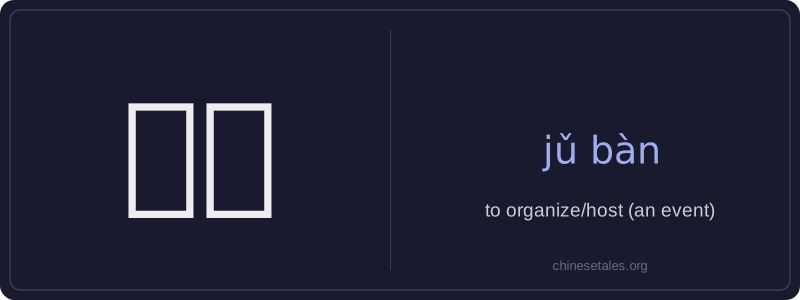
举办 (jǔ bàn) is a transitive verb meaning 'to organize' or 'to host' an event—such as a meeting, ceremony, competition, or exhibition. It combines two characters: 举 (jǔ), meaning 'to raise' or 'to hold up', and 办 (bàn), meaning 'to handle' or 'to manage'. Together, they convey the idea of formally arranging and carrying out an event with planning and responsibility. The word emphasizes official or institutional involvement—not casual gatherings.
This verb is commonly used in formal or semi-formal contexts, especially in news reports, announcements, and administrative language. It typically takes a noun phrase indicating the event as its object (e.g., 会议, 比赛, 展览). While it can be used in spoken Chinese, it sounds more deliberate and structured than colloquial alternatives like 办 or 搞. It’s rarely used for personal, small-scale events unless emphasizing effort or formality.
Example Sentences
Related Words
国语
‘Guó yǔ’ literally means 'national language'—
无论谁
‘无论谁’ (wú lùn shéi) is a pronoun meaning
面条
‘面条’ (miàn tiáo) literally means ‘flour str
背后
背后 literally means 'back + behind' and functions
外语
‘外语’ literally means ‘outside language’ —
认为
‘认为’ (rèn wéi) is a transitive verb meaning
认同
‘认同’ (tóng rèn) is a verb meaning ‘to ident
不对
不对 (bù duì) literally combines 不 (bù), meani