Word Explanation
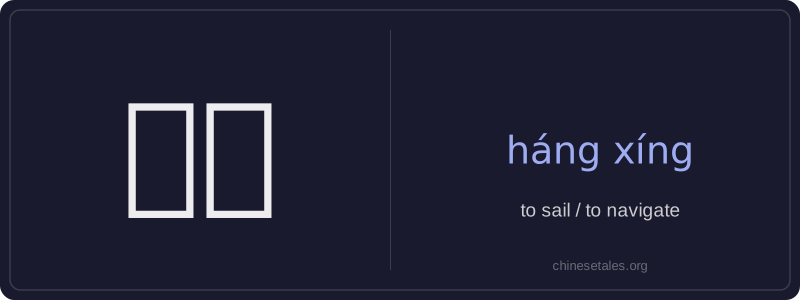
航行 (háng xíng) is a verb meaning 'to sail' or 'to navigate', referring specifically to the act of traveling by water—especially over long distances or open seas—using a ship, boat, or other watercraft. The first character 航 (háng) means 'to sail' or 'navigation' and often appears in words related to maritime travel (e.g., 航海 hánghǎi 'seafaring', 航线 hángxiàn 'shipping route'). The second character 行 (xíng) means 'to go' or 'to move', reinforcing motion. Together, they emphasize purposeful, controlled movement across water, typically implying planning, skill, and sometimes commercial or exploratory intent.
This word is commonly used in formal, technical, or descriptive contexts—such as maritime reports, news about shipping or naval operations, or historical accounts of exploration. It is rarely used for casual short trips on lakes or rivers; for those, 游泳 (yóuyǒng 'to swim') or 划船 (huá chuán 'to row a boat') are more appropriate. 航行 carries a sense of scale, duration, and intentionality, distinguishing it from general movement verbs like 走 (zǒu) or 去 (qù).
Example Sentences
Related Words
国语
‘Guó yǔ’ literally means 'national language'—
无论谁
‘无论谁’ (wú lùn shéi) is a pronoun meaning
面条
‘面条’ (miàn tiáo) literally means ‘flour str
认同
‘认同’ (tóng rèn) is a verb meaning ‘to ident
背后
背后 literally means 'back + behind' and functions
外语
‘外语’ literally means ‘outside language’ —
认为
‘认为’ (rèn wéi) is a transitive verb meaning
不对
不对 (bù duì) literally combines 不 (bù), meani