Word Explanation
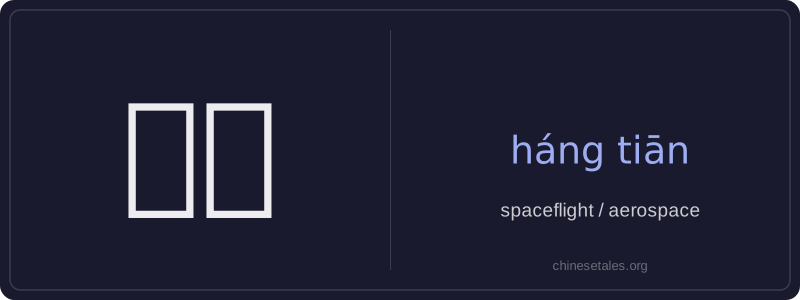
‘航天’ (háng tiān) literally combines ‘航’ (háng), meaning ‘to navigate’ or ‘to sail’, and ‘天’ (tiān), meaning ‘sky’ or ‘heaven’. Together, it refers to human activities involving flight beyond Earth’s atmosphere — especially spaceflight, spacecraft development, satellite launches, and crewed missions. It is the standard term used in official, scientific, and media contexts across China to describe aerospace endeavors.
Unlike the broader English word ‘aerospace’, which includes both atmospheric and space flight, ‘航天’ specifically emphasizes outer space operations — distinguishing it from ‘航空’ (háng kōng), which refers only to aviation within Earth’s atmosphere. The term carries national pride and technical prestige, frequently appearing in discussions of China’s space program, including missions to the Moon, Mars, and the Tiangong space station.
Example Sentences
Related Words
国语
‘Guó yǔ’ literally means 'national language'—
无论谁
‘无论谁’ (wú lùn shéi) is a pronoun meaning
面条
‘面条’ (miàn tiáo) literally means ‘flour str
认同
‘认同’ (tóng rèn) is a verb meaning ‘to ident
背后
背后 literally means 'back + behind' and functions
外语
‘外语’ literally means ‘outside language’ —
认为
‘认为’ (rèn wéi) is a transitive verb meaning
不对
不对 (bù duì) literally combines 不 (bù), meani