Word Explanation
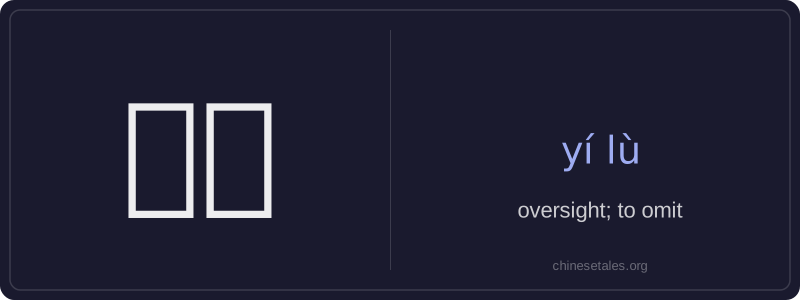
‘遗漏’ (yí lù) means ‘oversight’ as a noun or ‘to omit’ or ‘to leave out’ as a verb. It combines two characters: 遗 (yí), meaning ‘to lose’ or ‘to leave behind’, and 漏 (lù), meaning ‘to leak’ or ‘to let slip through’. Together, they vividly evoke the idea of something slipping away unnoticed—like information, items, or responsibilities that are unintentionally missed. This word carries a neutral-to-slightly-negative tone and is commonly used in formal, academic, or professional contexts, such as reviewing documents, checking lists, or evaluating work.
It often appears in phrases like ‘避免遗漏’ (avoid omissions), ‘检查是否有遗漏’ (check for omissions), or ‘造成遗漏’ (cause an omission). While it can refer to physical objects, it’s more frequently applied to abstract things: facts, names, steps in a process, or data entries. Unlike casual terms like ‘忘了’ (forgot), ‘遗漏’ emphasizes unintentional exclusion due to carelessness or oversight—not deliberate omission.
Example Sentences
Related Words
国语
‘Guó yǔ’ literally means 'national language'—
无论谁
‘无论谁’ (wú lùn shéi) is a pronoun meaning
面条
‘面条’ (miàn tiáo) literally means ‘flour str
认同
‘认同’ (tóng rèn) is a verb meaning ‘to ident
背后
背后 literally means 'back + behind' and functions
外语
‘外语’ literally means ‘outside language’ —
认为
‘认为’ (rèn wéi) is a transitive verb meaning
不对
不对 (bù duì) literally combines 不 (bù), meani