Word Explanation
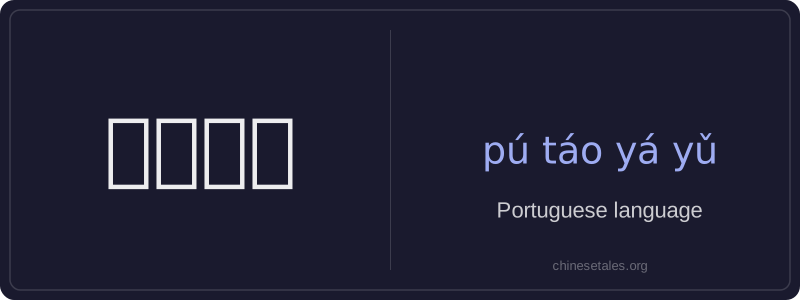
葡萄牙语 (pú táo yá yǔ) literally means 'Portugal language' and refers to the official language of Portugal, Brazil, and several other countries including Angola, Mozambique, and Macau. Though the characters 葡萄牙 originally name the country (Portugal), they are not related to grapes (pú táo) or teeth (yá) in meaning — this is a phonetic transliteration from Portuguese 'Portugal'. The final character 语 (yǔ) means 'language', making the compound clearly denote a linguistic system.
This term is used formally and neutrally in education, media, and daily conversation when referring to the language itself — for example, in language learning contexts, international diplomacy, or cultural exchange. It’s never used to refer to people (who are 葡萄牙人, pú táo yá rén) or the country (葡萄牙, pú táo yá). Learners should avoid misreading the characters literally; the word functions as a single proper noun, not a descriptive phrase.
Example Sentences
Related Words
国语
‘Guó yǔ’ literally means 'national language'—
无论谁
‘无论谁’ (wú lùn shéi) is a pronoun meaning
面条
‘面条’ (miàn tiáo) literally means ‘flour str
外语
‘外语’ literally means ‘outside language’ —
认同
‘认同’ (tóng rèn) is a verb meaning ‘to ident
背后
背后 literally means 'back + behind' and functions
认为
‘认为’ (rèn wéi) is a transitive verb meaning
不对
不对 (bù duì) literally combines 不 (bù), meani