Word Explanation
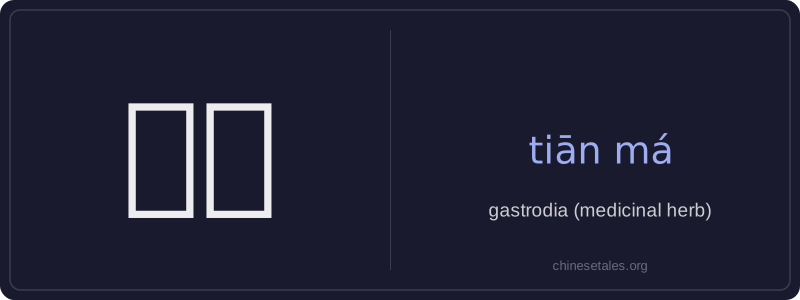
‘Tiān má’ (Gastrodia elata) is a perennial orchid native to East Asia, valued for centuries in traditional Chinese medicine. Its dried rhizomes are used to calm liver wind, relieve dizziness, and ease headaches or numbness—especially in patterns involving internal wind or hyperactive liver yang. Though it’s a plant, it lacks chlorophyll and lives symbiotically with fungi in forest soil, making it unusual among medicinal herbs.
The characters literally mean ‘heavenly hemp’: 天 (tiān) conveys ‘celestial’, ‘superior’, or ‘exceptional’, while 麻 (má) historically referred to hemp-like fibrous texture—but here evokes its knobby, irregular appearance and mild numbing effect when prepared. It’s never eaten as food; instead, it’s decocted in herbal formulas or ground into powder, often combined with herbs like chuan xiong or gou teng. Modern research explores its neuroprotective compounds, notably gastrodin.
Example Sentences
Related Words
国语
‘Guó yǔ’ literally means 'national language'—
无论谁
‘无论谁’ (wú lùn shéi) is a pronoun meaning
面条
‘面条’ (miàn tiáo) literally means ‘flour str
外语
‘外语’ literally means ‘outside language’ —
认同
‘认同’ (tóng rèn) is a verb meaning ‘to ident
中学
'Zhōngxué' literally combines 'zhōng' (middle)
背后
背后 literally means 'back + behind' and functions
认为
‘认为’ (rèn wéi) is a transitive verb meaning