Word Explanation
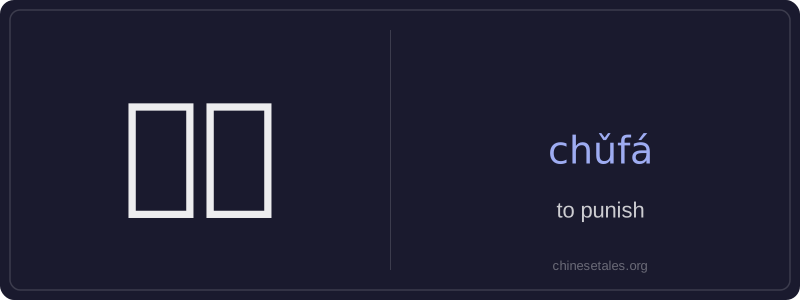
处罚 (chǔfá) is a verb meaning 'to punish' or 'to penalize', typically used in formal, official, or institutional contexts—such as law enforcement, workplace discipline, school rules, or public health regulations. The first character 处 (chǔ) means 'to deal with' or 'to handle', and the second 罚 (fá) means 'punishment' or 'penalty'; together they emphasize an authoritative action taken in response to a violation. Unlike more colloquial terms like 惩罚 (chéngfá), 处罚 carries a procedural, administrative connotation—it often implies an official decision backed by rules or statutes.
This word is commonly used with agents (e.g., police, supervisors, regulators) and targets (e.g., violators, offenders, institutions). It frequently appears in passive constructions (e.g., 被处罚) or with modifiers indicating severity (e.g., 严厉处罚, 'severely punish'). While it can describe penalties ranging from fines to suspensions, it rarely refers to physical punishment or informal reprimands—those are better expressed with words like 批评 or 教训.
Example Sentences
Related Words
国语
‘Guó yǔ’ literally means 'national language'—
面条
‘面条’ (miàn tiáo) literally means ‘flour str
无论谁
‘无论谁’ (wú lùn shéi) is a pronoun meaning
外语
‘外语’ literally means ‘outside language’ —
认同
‘认同’ (tóng rèn) is a verb meaning ‘to ident
不对
不对 (bù duì) literally combines 不 (bù), meani
中学
'Zhōngxué' literally combines 'zhōng' (middle)
背后
背后 literally means 'back + behind' and functions