Word Explanation
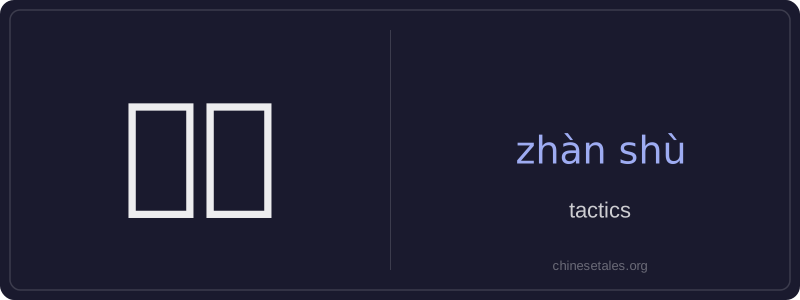
战术 (zhàn shù) literally combines 战 (zhàn), meaning 'to fight' or 'war', and 术 (shù), meaning 'art', 'skill', or 'technique'. Together, they refer to the planned methods or strategies used to achieve a specific goal in a competitive or adversarial context — most commonly in military operations, sports, business, or even games. Unlike strategy (战略, zhàn lüè), which refers to overarching long-term planning, tactics focus on short-term, practical actions taken during an engagement.
This word is widely used in formal and semi-formal contexts, especially when discussing decision-making under pressure. It implies deliberate, intelligent adaptation to immediate circumstances rather than instinct or chance. While originally rooted in warfare, 战术 now appears frequently in coaching, marketing, education, and even everyday problem-solving — for example, teaching students 'study tactics' or debating 'negotiation tactics'.
Example Sentences
Related Words
国语
‘Guó yǔ’ literally means 'national language'—
面条
‘面条’ (miàn tiáo) literally means ‘flour str
无论谁
‘无论谁’ (wú lùn shéi) is a pronoun meaning
外语
‘外语’ literally means ‘outside language’ —
认同
‘认同’ (tóng rèn) is a verb meaning ‘to ident
不对
不对 (bù duì) literally combines 不 (bù), meani
中学
'Zhōngxué' literally combines 'zhōng' (middle)
背后
背后 literally means 'back + behind' and functions