Word Explanation
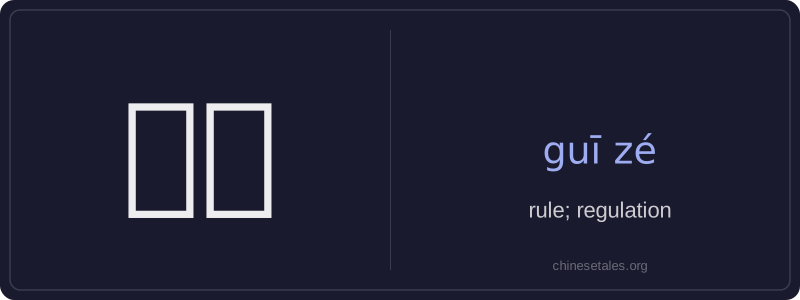
规则 (guī zé) means 'rule' or 'regulation'—a formal or established principle that governs behavior, procedures, or operations. The character 规 (guī) originally referred to a compass used for drawing circles and came to symbolize standards, models, or norms; 则 (zé) means 'principle', 'clause', or 'law', often appearing in classical texts to denote a binding guideline. Together, 规则 emphasizes codified, widely accepted standards—not just personal preferences but shared expectations in institutions, games, workplaces, or public life.
This word is commonly used in contexts like school policies, sports regulations, traffic laws, or company guidelines. It carries a neutral-to-formal tone and implies enforceability or accountability. While similar to 办法 (bàn fǎ, 'method') or 建议 (jiàn yì, 'suggestion'), 规则 specifically denotes mandatory or authoritative directives. It’s rarely used for informal or temporary arrangements—those would be more likely described as 习惯 (xí guàn, 'habit') or 协议 (xié yì, 'agreement').
Example Sentences
Related Words
国语
‘Guó yǔ’ literally means 'national language'—
面条
‘面条’ (miàn tiáo) literally means ‘flour str
无论谁
‘无论谁’ (wú lùn shéi) is a pronoun meaning
外语
‘外语’ literally means ‘outside language’ —
认同
‘认同’ (tóng rèn) is a verb meaning ‘to ident
不对
不对 (bù duì) literally combines 不 (bù), meani
中学
'Zhōngxué' literally combines 'zhōng' (middle)
背后
背后 literally means 'back + behind' and functions