Word Explanation
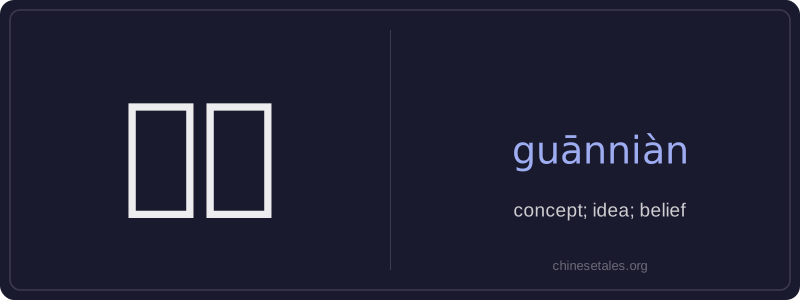
‘观念’ (guānniàn) is a noun meaning ‘concept,’ ‘idea,’ or ‘belief’—especially one that shapes how a person perceives or judges the world. It combines 观 (guān), meaning ‘to observe’ or ‘view,’ and 念 (niàn), meaning ‘thought’ or ‘idea.’ Together, they literally suggest ‘a view held in the mind,’ emphasizing that this is not just abstract knowledge but an internalized perspective influencing attitudes and behavior.
This word often appears in discussions about cultural values, social change, education, or personal development—for example, ‘环保观念’ (environmental awareness) or ‘婚姻观念’ (views on marriage). Unlike more neutral terms like ‘想法’ (xiǎngfǎ, ‘thought’) or ‘意见’ (yìjiàn, ‘opinion’), ‘观念’ implies deeper, more stable, and often socially shaped convictions. It’s commonly used in formal writing and speech, though also frequent in everyday conversation when reflecting on values or generational differences.
Example Sentences
Related Words
国语
‘Guó yǔ’ literally means 'national language'—
面条
‘面条’ (miàn tiáo) literally means ‘flour str
无论谁
‘无论谁’ (wú lùn shéi) is a pronoun meaning
外语
‘外语’ literally means ‘outside language’ —
认同
‘认同’ (tóng rèn) is a verb meaning ‘to ident
不对
不对 (bù duì) literally combines 不 (bù), meani
中学
'Zhōngxué' literally combines 'zhōng' (middle)
背后
背后 literally means 'back + behind' and functions