Word Explanation
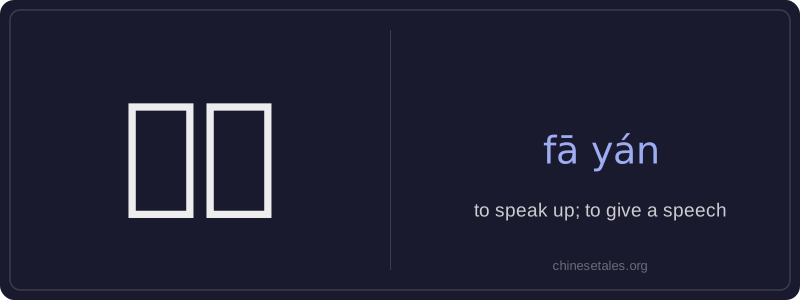
‘发言’ literally combines ‘fā’ (to issue, to emit) and ‘yán’ (speech, words), meaning the act of expressing one’s thoughts aloud in a formal or semi-formal setting. It emphasizes active participation through speaking — not just talking casually, but contributing meaningfully, often during meetings, classes, conferences, or public discussions. The word carries a sense of responsibility and intention: you’re expected to have something relevant or prepared to say.
While ‘发言’ can be used as a noun (e.g., ‘他的发言很精彩’ — ‘His speech was excellent’), it functions most commonly as a verb meaning ‘to speak up’ or ‘to give a speech’. It’s neutral in register but leans slightly formal — you’d use it in school presentations, workplace team meetings, or community forums, not while chatting with friends over coffee. The object is usually implied or introduced with ‘关于…’ (about…) or ‘在…上’ (at/in…).
Example Sentences
Related Words
国语
‘Guó yǔ’ literally means 'national language'—
面条
‘面条’ (miàn tiáo) literally means ‘flour str
无论谁
‘无论谁’ (wú lùn shéi) is a pronoun meaning
外语
‘外语’ literally means ‘outside language’ —
认同
‘认同’ (tóng rèn) is a verb meaning ‘to ident
不对
不对 (bù duì) literally combines 不 (bù), meani
中学
'Zhōngxué' literally combines 'zhōng' (middle)
背后
背后 literally means 'back + behind' and functions