Word Explanation
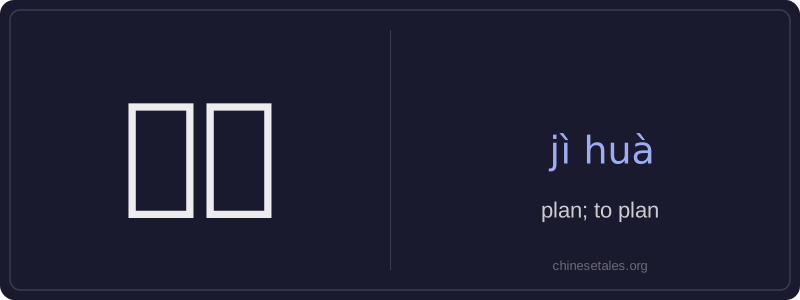
计划 (jì huà) means 'plan' as a noun and 'to plan' as a verb. The character 计 (jì) originally meant 'to calculate' or 'to consider carefully', while 划 (huà) means 'to draw', 'to outline', or 'to divide'—together, they evoke the idea of thoughtfully outlining steps or dividing tasks to achieve a goal. This word is used broadly in daily life, work, and study contexts: from making a weekend itinerary to drafting a business strategy.
As a noun, it’s often preceded by measure words like 一个 (yī gè) or this/that (这个/那个). As a verb, it usually appears before an object (e.g., 计划旅行) or in compound structures like 计划着 (jì huà zhe) for ongoing planning. It carries a neutral-to-formal register and implies intentionality and structure—not just a vague idea, but a considered course of action.
Example Sentences
Related Words
国语
‘Guó yǔ’ literally means 'national language'—
面条
‘面条’ (miàn tiáo) literally means ‘flour str
无论谁
‘无论谁’ (wú lùn shéi) is a pronoun meaning
外语
‘外语’ literally means ‘outside language’ —
认同
‘认同’ (tóng rèn) is a verb meaning ‘to ident
不对
不对 (bù duì) literally combines 不 (bù), meani
中学
'Zhōngxué' literally combines 'zhōng' (middle)
背后
背后 literally means 'back + behind' and functions