Word Explanation
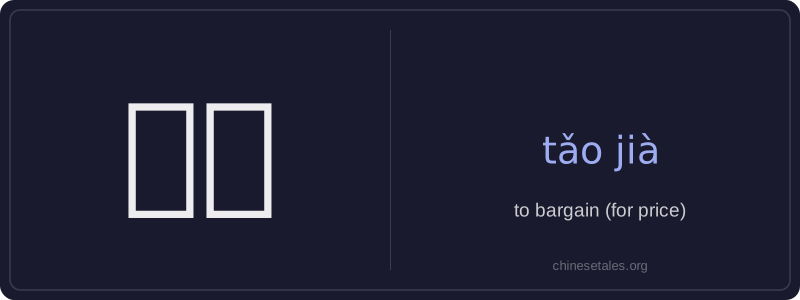
‘讨价’ (tǎo jià) literally means ‘to seek price’ — ‘讨’ (tǎo) conveys the idea of asking for or requesting, while ‘价’ (jià) means ‘price’. Together, they form a verb meaning ‘to bargain’ or ‘to haggle’, especially in informal or traditional market settings where buyers negotiate with sellers to lower the asking price. It’s commonly used in spoken Mandarin and reflects a practical, interactive aspect of daily economic life.
This term is often paired with ‘还价’ (huán jià, ‘to counter-offer’) to describe the full bargaining exchange: first you ‘tǎo jià’ (ask for a lower price), then the seller may respond and you ‘huán jià’. While not used in formal contracts or fixed-price retail stores, it remains essential vocabulary for street markets, flea markets, antique shops, and small family-run businesses across China.
Example Sentences
Related Words
国语
‘Guó yǔ’ literally means 'national language'—
面条
‘面条’ (miàn tiáo) literally means ‘flour str
无论谁
‘无论谁’ (wú lùn shéi) is a pronoun meaning
外语
‘外语’ literally means ‘outside language’ —
认同
‘认同’ (tóng rèn) is a verb meaning ‘to ident
不对
不对 (bù duì) literally combines 不 (bù), meani
中学
'Zhōngxué' literally combines 'zhōng' (middle)
背后
背后 literally means 'back + behind' and functions