Word Explanation
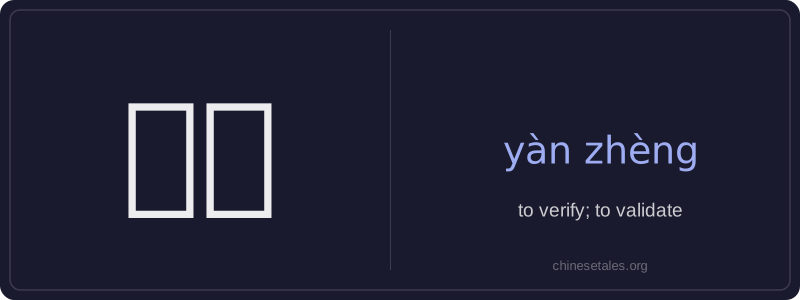
验证 (yàn zhèng) is a verb meaning 'to verify' or 'to validate' — to check whether something is true, accurate, or meets required standards. The character 验 (yàn) means 'to examine' or 'to test', often in contexts like medical tests or quality checks; 证 (zhèng) means 'evidence' or 'proof'. Together, they convey the idea of confirming truth or correctness through evidence or testing. This word is commonly used in formal, technical, and professional settings — especially in science, medicine, IT security (e.g., verifying login credentials), and regulatory compliance.
Unlike more casual synonyms like 确认 (quèrèn), 验证 implies a systematic, often objective process involving data, documentation, or measurable criteria. It frequently appears in compound nouns such as 验证码 (yànzhèngmǎ, 'verification code') and 实验验证 (shíyàn yànzhèng, 'experimental verification'). While it can be used transitively ('verify X'), it’s also common in passive or noun-modifier structures (e.g., 验证过程, 'verification process').
Example Sentences
Related Words
国语
‘Guó yǔ’ literally means 'national language'—
面条
‘面条’ (miàn tiáo) literally means ‘flour str
无论谁
‘无论谁’ (wú lùn shéi) is a pronoun meaning
不对
不对 (bù duì) literally combines 不 (bù), meani
外语
‘外语’ literally means ‘outside language’ —
认同
‘认同’ (tóng rèn) is a verb meaning ‘to ident
中学
'Zhōngxué' literally combines 'zhōng' (middle)
背后
背后 literally means 'back + behind' and functions