Word Explanation
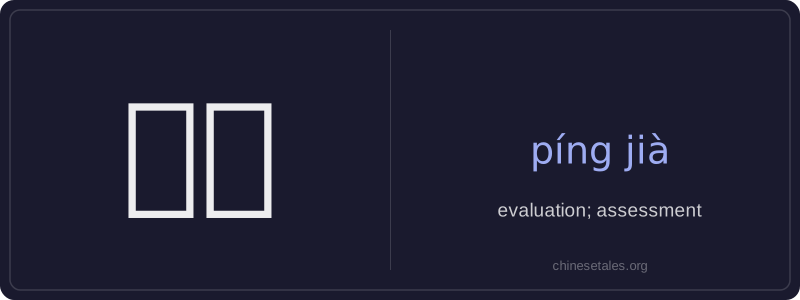
‘评价’ (píng jià) literally combines ‘评’ (to comment, judge, or review) and ‘价’ (value or worth), together meaning the act of assessing or judging something’s quality, significance, or merit. As a noun, it refers to an evaluation or assessment itself — for example, a teacher’s written feedback on a student’s work or a doctor’s clinical judgment about a patient’s condition. As a verb, it means ‘to evaluate’ or ‘to assess’, often followed by an object and sometimes by a result clause introduced by ‘为’ (wéi) or ‘是’ (shì).
This word is common in formal, academic, medical, and professional contexts — such as performance reviews, product testing, educational grading, or health assessments. It carries a neutral-to-formal register and is rarely used in casual speech unless referring to serious judgments. Unlike more colloquial terms like ‘看法’ (opinion) or ‘感觉’ (feeling), ‘评价’ implies a reasoned, often evidence-based conclusion.
Example Sentences
Related Words
国语
‘Guó yǔ’ literally means 'national language'—
面条
‘面条’ (miàn tiáo) literally means ‘flour str
无论谁
‘无论谁’ (wú lùn shéi) is a pronoun meaning
不对
不对 (bù duì) literally combines 不 (bù), meani
外语
‘外语’ literally means ‘outside language’ —
认同
‘认同’ (tóng rèn) is a verb meaning ‘to ident
中学
'Zhōngxué' literally combines 'zhōng' (middle)
背后
背后 literally means 'back + behind' and functions