Word Explanation
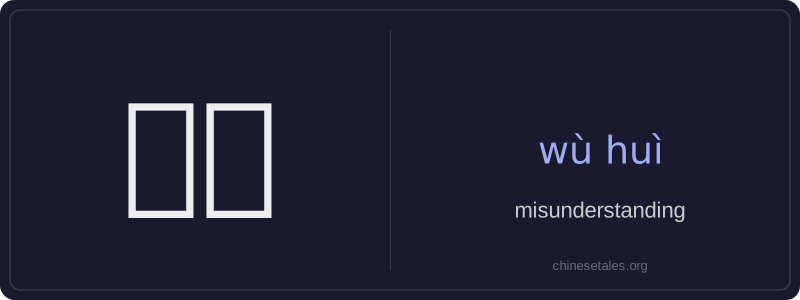
‘误会’ (wù huì) is a noun meaning ‘misunderstanding’—a situation where two or more people interpret the same words, actions, or intentions incorrectly, leading to confusion or conflict. The first character 误 means ‘wrong’ or ‘erroneous’, and the second character 会 means ‘to understand’ or ‘to comprehend’. Together, they literally mean ‘wrong understanding’. It’s commonly used in interpersonal contexts: arguments between friends, miscommunication at work, or cultural blunders.
This word implies that the misunderstanding is unintentional and often resolvable through clarification. It carries a neutral-to-slightly-negative tone—not as severe as ‘deception’ or ‘lie’, but still emotionally charged when feelings are hurt. ‘误会’ frequently appears with verbs like 发生 (fāshēng, ‘to occur’), 解释 (jiěshì, ‘to explain’), or 消除 (xiāochú, ‘to resolve’). It’s widely used in spoken and written Mandarin, from casual texting to formal apologies.
Example Sentences
Related Words
国语
‘Guó yǔ’ literally means 'national language'—
面条
‘面条’ (miàn tiáo) literally means ‘flour str
无论谁
‘无论谁’ (wú lùn shéi) is a pronoun meaning
不对
不对 (bù duì) literally combines 不 (bù), meani
外语
‘外语’ literally means ‘outside language’ —
认同
‘认同’ (tóng rèn) is a verb meaning ‘to ident
中学
'Zhōngxué' literally combines 'zhōng' (middle)
背后
背后 literally means 'back + behind' and functions