Word Explanation
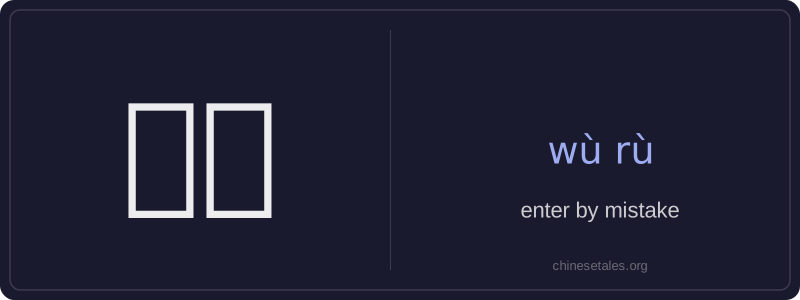
‘误入’ is a compound verb meaning 'to enter by mistake' or 'to accidentally go into'. The first character 误 (wù) means 'mistake', 'error', or 'wrongly', while the second character 入 (rù) means 'to enter' or 'to go into'. Together, they form a concise, formal-sounding verb indicating unintentional entry—often into a place, situation, or even a conceptual domain like a field of study. It carries a slightly literary or written register and is common in news reports, travel warnings, literature, and official notices.
This term emphasizes lack of intention rather than negligence; it’s neutral in tone but may imply mild consequence (e.g., trespassing, confusion, or danger). It’s typically used with places (a forest, a restricted zone, a private property) or abstract spaces (a wrong career path, an illegal organization), and usually appears in past-tense constructions with aspect markers like 了 or 过. Unlike casual alternatives, 误入 suggests the error was plausible—due to poor signage, similar-looking entrances, or misinformation—not carelessness.
Example Sentences
Related Words
国语
‘Guó yǔ’ literally means 'national language'—
面条
‘面条’ (miàn tiáo) literally means ‘flour str
无论谁
‘无论谁’ (wú lùn shéi) is a pronoun meaning
不对
不对 (bù duì) literally combines 不 (bù), meani
外语
‘外语’ literally means ‘outside language’ —
认同
‘认同’ (tóng rèn) is a verb meaning ‘to ident
中学
'Zhōngxué' literally combines 'zhōng' (middle)
背后
背后 literally means 'back + behind' and functions