Word Explanation
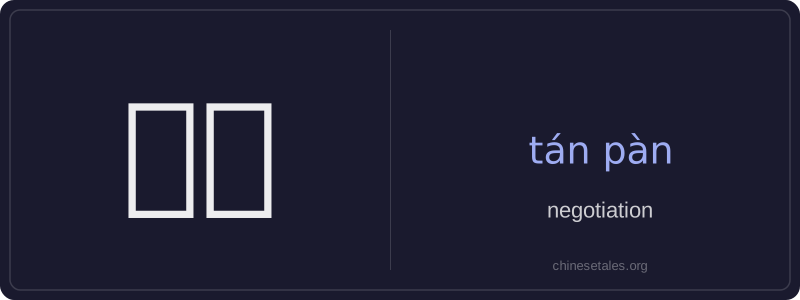
谈判 (tán pàn) is a compound noun meaning 'negotiation' — the formal process of discussion between parties to reach an agreement, often involving compromise. The first character 谈 means 'to talk' or 'to discuss', emphasizing dialogue and exchange of ideas. The second character 判 means 'to judge' or 'to decide', reflecting the goal of reaching a clear, mutually acceptable resolution. Together, they convey purposeful, structured discussion aimed at settling differences or finalizing terms.
This word is commonly used in business, diplomacy, labor relations, and legal contexts — for example, trade negotiations, salary discussions, or peace talks. It carries a formal, professional tone and rarely appears in casual conversation. While it can function as a verb (e.g., 他们正在谈判), it most frequently appears as a noun (e.g., 进行谈判, 参加谈判). Unlike more general words like 讨论 (tǎolùn, 'discussion'), 谈判 implies stakes, opposing interests, and an expected outcome.
Example Sentences
Related Words
国语
‘Guó yǔ’ literally means 'national language'—
面条
‘面条’ (miàn tiáo) literally means ‘flour str
无论谁
‘无论谁’ (wú lùn shéi) is a pronoun meaning
不对
不对 (bù duì) literally combines 不 (bù), meani
外语
‘外语’ literally means ‘outside language’ —
认同
‘认同’ (tóng rèn) is a verb meaning ‘to ident
中学
'Zhōngxué' literally combines 'zhōng' (middle)
背后
背后 literally means 'back + behind' and functions