Word Explanation
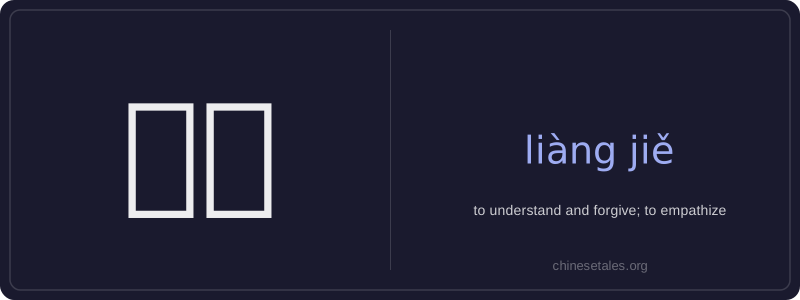
‘谅解’ (liàng jiě) is a compound word meaning ‘to understand and forgive’ — it expresses empathetic acceptance of someone’s mistake or shortcoming, often after recognizing their good intentions or difficult circumstances. The first character 谅 (liàng) means ‘to pardon’ or ‘to trust’, carrying connotations of moral leniency; the second character 解 (jiě) means ‘to understand’ or ‘to resolve’, emphasizing cognitive and emotional insight. Together, they form a nuanced term that goes beyond simple forgiveness: it implies both intellectual comprehension and heartfelt compassion.
This word is commonly used in formal or sincere interpersonal contexts — such as apologies, conflict resolution, or expressing gratitude for patience. It appears frequently in written communication (e.g., letters, emails, official statements) and spoken language when seeking or granting grace after a misunderstanding or error. While it can function as a noun (e.g., ‘seeking mutual 谅解’) or a verb (e.g., ‘I sincerely ask for your 谅解’), it is rarely used in casual speech among close friends, where simpler terms like 原谅 (yuán liàng) are preferred.
Example Sentences
Related Words
国语
‘Guó yǔ’ literally means 'national language'—
面条
‘面条’ (miàn tiáo) literally means ‘flour str
无论谁
‘无论谁’ (wú lùn shéi) is a pronoun meaning
不对
不对 (bù duì) literally combines 不 (bù), meani
外语
‘外语’ literally means ‘outside language’ —
认同
‘认同’ (tóng rèn) is a verb meaning ‘to ident
中学
'Zhōngxué' literally combines 'zhōng' (middle)
背后
背后 literally means 'back + behind' and functions