Word Explanation
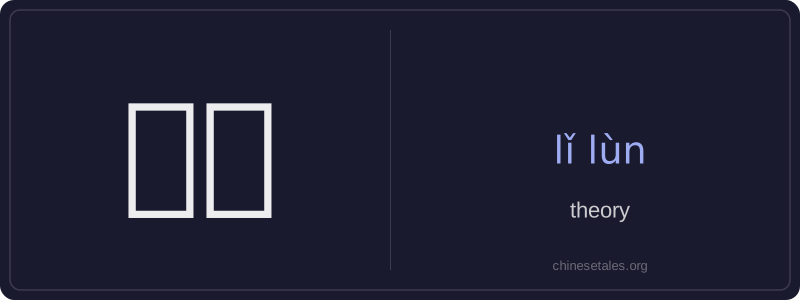
理论 (lǐ lùn) means 'theory' — a systematic set of ideas intended to explain something, especially one based on general principles independent of immediate practice. The first character 理 (lǐ) means 'principle', 'reason', or 'logic', while 论 (lùn) means 'to discuss', 'argument', or 'treatise'. Together, they convey the idea of a reasoned, organized explanation rather than mere opinion or observation. 理论 often contrasts with 实践 (shíjiàn, 'practice') in Chinese academic and philosophical discourse — for example, the common phrase '理论联系实际' ('theory linked with practice').
This word appears frequently in academic, scientific, medical, and political contexts. It’s used in compound terms like 进化论 (jìnhuà lùn, 'theory of evolution'), 相对论 (xiāngduì lùn, 'theory of relativity'), and 中医理论 (zhōngyī lǐlùn, 'Traditional Chinese Medicine theory'). Unlike colloquial English use of 'theory' (e.g., 'just a theory'), 理论 in Chinese carries strong connotations of rigor, scholarly foundation, and logical coherence.
Example Sentences
Related Words
国语
‘Guó yǔ’ literally means 'national language'—
面条
‘面条’ (miàn tiáo) literally means ‘flour str
无论谁
‘无论谁’ (wú lùn shéi) is a pronoun meaning
不对
不对 (bù duì) literally combines 不 (bù), meani
外语
‘外语’ literally means ‘outside language’ —
认同
‘认同’ (tóng rèn) is a verb meaning ‘to ident
中学
'Zhōngxué' literally combines 'zhōng' (middle)
背后
背后 literally means 'back + behind' and functions