Word Explanation
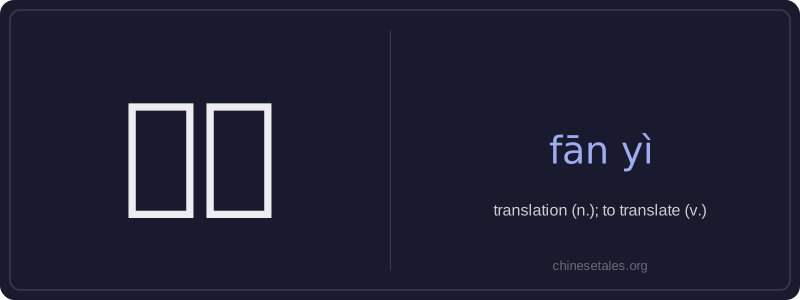
翻译 (fān yì) means 'translation' as a noun and 'to translate' as a verb. The character 翻 (fān) literally means 'to turn over' or 'to flip', suggesting the act of turning text from one language into another. 译 (yì) means 'to interpret' or 'to render in another language', and appears in many terms related to language conversion, such as 口译 (oral interpretation) and 笔译 (written translation). Together, 翻译 emphasizes the full process of accurately conveying meaning across languages—not just word-for-word substitution, but cultural and contextual adaptation.
This word is used widely in academic, professional, and everyday contexts: students may do translation exercises, companies hire translators, and apps offer real-time translation. It can function as both subject ('This translation is clear') and object ('She did the translation'), and as a verb it commonly appears with objects ('translate this article') or in compound verbs like 翻译出来 (fān yì chūlái, 'to translate out').
Example Sentences
Related Words
国语
‘Guó yǔ’ literally means 'national language'—
面条
‘面条’ (miàn tiáo) literally means ‘flour str
无论谁
‘无论谁’ (wú lùn shéi) is a pronoun meaning
不对
不对 (bù duì) literally combines 不 (bù), meani
外语
‘外语’ literally means ‘outside language’ —
认同
‘认同’ (tóng rèn) is a verb meaning ‘to ident
中学
'Zhōngxué' literally combines 'zhōng' (middle)
背后
背后 literally means 'back + behind' and functions