Word Explanation
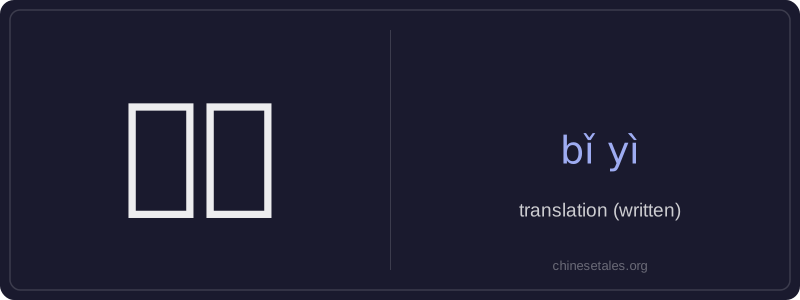
‘笔译’ literally means ‘brush translation’, but in modern usage it refers specifically to written translation—converting text from one language to another without spoken interaction. The character 笔 (bǐ) means ‘writing brush’ or more broadly ‘writing’, while 译 (yì) means ‘to translate’. Together, they distinguish written translation from oral interpretation (口译, kǒu yì), which involves real-time speaking and listening.
This term is commonly used in professional, academic, and publishing contexts—for example, when referring to translators who work with documents, books, websites, or legal contracts. It emphasizes accuracy, fidelity to the source text, and careful revision, rather than speed or improvisation. While ‘翻译’ (fān yì) is the general word for ‘translation’, ‘笔译’ specifies the written modality and often implies a formal, deliberate process.
Example Sentences
Related Words
国语
‘Guó yǔ’ literally means 'national language'—
面条
‘面条’ (miàn tiáo) literally means ‘flour str
无论谁
‘无论谁’ (wú lùn shéi) is a pronoun meaning
不对
不对 (bù duì) literally combines 不 (bù), meani
外语
‘外语’ literally means ‘outside language’ —
认同
‘认同’ (tóng rèn) is a verb meaning ‘to ident
中学
'Zhōngxué' literally combines 'zhōng' (middle)
背后
背后 literally means 'back + behind' and functions