Word Explanation
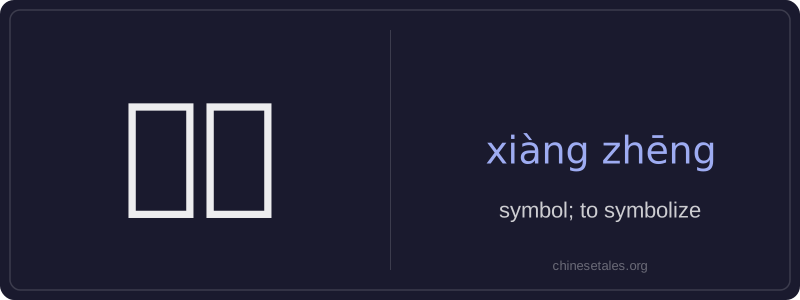
‘象征’ (xiàng zhēng) functions as both a noun meaning ‘symbol’ and a verb meaning ‘to symbolize’ or ‘to represent’. The first character 象 (xiàng) originally means ‘elephant’, but in classical Chinese it also came to mean ‘image’, ‘form’, or ‘appearance’ — hence its extended sense of ‘that which stands for something else’. The second character 征 (zhēng) means ‘to indicate’, ‘to show’, or ‘to demonstrate’. Together, 象征 conveys the idea of something visible or concrete that points to an abstract concept — like peace, authority, or cultural identity. It’s commonly used in formal, literary, or ceremonial contexts, such as national emblems, ritual objects, or artistic motifs.
This word appears frequently in political discourse, literature, traditional festivals, and branding — for instance, the dragon is a long-standing 象征 of imperial power and auspiciousness in Chinese culture. Unlike casual words like 表示 (biǎo shì), 象征 carries weight and intentionality: it implies deep-rooted, widely recognized cultural resonance rather than simple personal expression.
Example Sentences
Related Words
国语
‘Guó yǔ’ literally means 'national language'—
面条
‘面条’ (miàn tiáo) literally means ‘flour str
无论谁
‘无论谁’ (wú lùn shéi) is a pronoun meaning
不对
不对 (bù duì) literally combines 不 (bù), meani
外语
‘外语’ literally means ‘outside language’ —
认同
‘认同’ (tóng rèn) is a verb meaning ‘to ident
中学
'Zhōngxué' literally combines 'zhōng' (middle)
背后
背后 literally means 'back + behind' and functions