Word Explanation
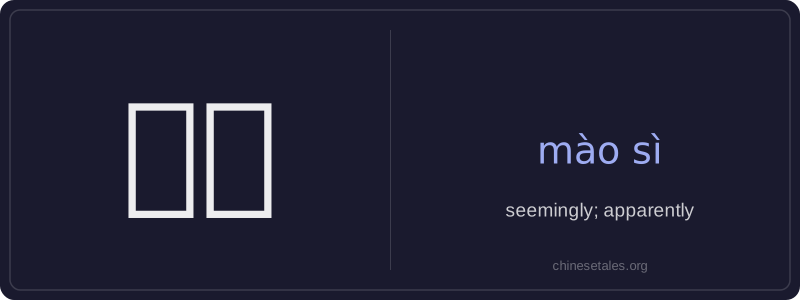
"Mào sì" literally combines 貌 (mào), meaning 'appearance' or 'outward look', and 似 (sì), meaning 'to resemble' or 'to seem'. Together, they form an adverb meaning 'seemingly' or 'apparently' — describing something that appears to be true based on surface evidence, though it may not actually be so. It conveys a sense of tentative judgment or mild skepticism, often implying that the speaker isn’t fully convinced.
This expression is common in both spoken and written Chinese, especially in informal or semi-formal contexts like online communication, conversations, or light journalism. It’s frequently used before verbs or adjectives (e.g., 貌似很忙, 貌似不对) and carries a slightly colloquial, understated tone — softer and more nuanced than 更像是 ('more like') or 看起来 ('it looks like'). While not sarcastic by itself, context can lend it a humorous or ironic nuance when the apparent truth is clearly at odds with reality.
Example Sentences
Related Words
国语
‘Guó yǔ’ literally means 'national language'—
面条
‘面条’ (miàn tiáo) literally means ‘flour str
无论谁
‘无论谁’ (wú lùn shéi) is a pronoun meaning
不对
不对 (bù duì) literally combines 不 (bù), meani
外语
‘外语’ literally means ‘outside language’ —
认同
‘认同’ (tóng rèn) is a verb meaning ‘to ident
中学
'Zhōngxué' literally combines 'zhōng' (middle)
背后
背后 literally means 'back + behind' and functions