Word Explanation
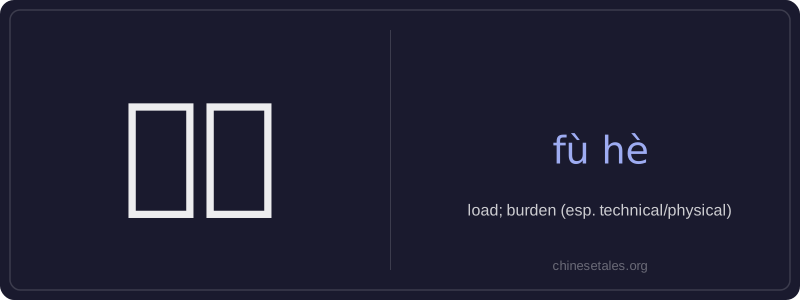
'负荷' (fù hè) is a compound noun meaning 'load' or 'burden', especially in technical, physical, or physiological contexts. The character 负 (fù) means 'to bear' or 'to carry', often implying responsibility or weight; 荷 (hè) also means 'to bear' or 'to carry', reinforcing the idea of carrying something heavy—literally or figuratively. Together, they emphasize measurable, often demanding, physical or systemic strain, such as electrical load, mechanical stress, or physiological workload (e.g., cardiac or muscular load). Unlike the more general term 负担 (fùdān), which often connotes emotional or social burden, 负荷 is preferred in engineering, medicine, sports science, and environmental studies.
This word frequently appears in compound terms like 负荷量 (fùhè liàng, 'load magnitude'), 超负荷 (chāo fùhè, 'overload'), and 心脏负荷 (xīnzàng fùhè, 'cardiac load'). It’s rarely used in casual speech about everyday stress or personal problems—it carries a precise, quantifiable nuance and is typically found in formal reports, technical manuals, or clinical assessments.
Example Sentences
Related Words
国语
‘Guó yǔ’ literally means 'national language'—
面条
‘面条’ (miàn tiáo) literally means ‘flour str
无论谁
‘无论谁’ (wú lùn shéi) is a pronoun meaning
不对
不对 (bù duì) literally combines 不 (bù), meani
外语
‘外语’ literally means ‘outside language’ —
认同
‘认同’ (tóng rèn) is a verb meaning ‘to ident
中学
'Zhōngxué' literally combines 'zhōng' (middle)
背后
背后 literally means 'back + behind' and functions