Word Explanation
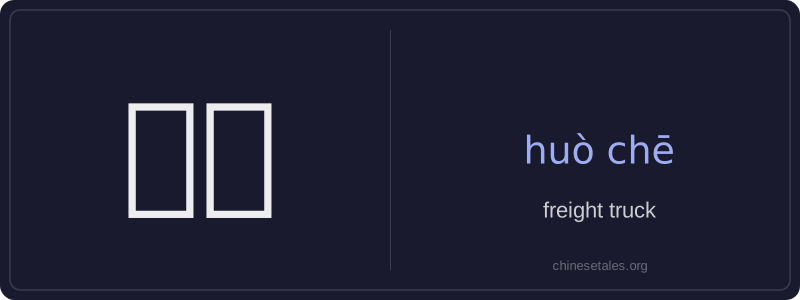
‘货车’ literally combines ‘货’ (huò), meaning ‘goods’ or ‘cargo’, and ‘车’ (chē), meaning ‘vehicle’ or ‘car’. Together, it refers specifically to a motor vehicle designed for transporting goods—not people—such as delivery trucks, lorries, or freight vans. It is a neutral, standard term used across mainland China in logistics, transportation, and everyday speech.
This word emphasizes function over form: any vehicle whose primary purpose is hauling cargo qualifies as a 货车—even small pickup trucks or large articulated lorries. It contrasts with passenger vehicles like ‘客车’ (kèchē, bus) or ‘轿车’ (jiàochē, sedan). While regional terms exist (e.g., ‘卡车’ for ‘truck’), ‘货车’ is universally understood and frequently appears on road signs, shipping documents, and traffic regulations.
Example Sentences
Related Words
国语
‘Guó yǔ’ literally means 'national language'—
面条
‘面条’ (miàn tiáo) literally means ‘flour str
无论谁
‘无论谁’ (wú lùn shéi) is a pronoun meaning
不对
不对 (bù duì) literally combines 不 (bù), meani
外语
‘外语’ literally means ‘outside language’ —
认同
‘认同’ (tóng rèn) is a verb meaning ‘to ident
中学
'Zhōngxué' literally combines 'zhōng' (middle)
背后
背后 literally means 'back + behind' and functions