Word Explanation
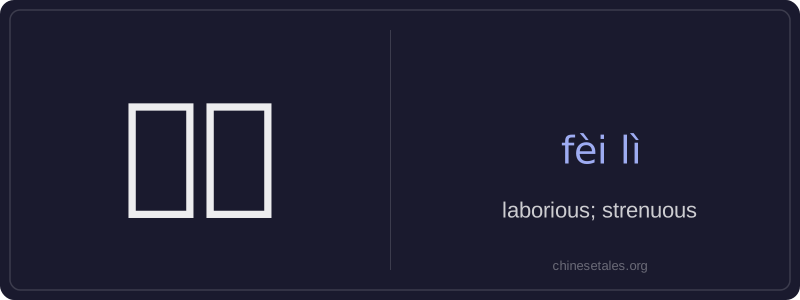
‘费力’ is an adjective meaning ‘laborious,’ ‘strenuous,’ or ‘requiring great effort.’ It literally combines 费 (fèi), meaning ‘to expend’ or ‘to consume,’ and 力 (lì), meaning ‘strength’ or ‘effort.’ Together, they describe an action or task that drains physical or mental energy — not just difficult, but actively demanding exertion. It often implies inefficiency or unnecessary strain: for example, lifting a heavy box without help is 费力, but using a dolly makes it easier.
This word is commonly used in everyday spoken and written Chinese to evaluate how taxing an activity feels. It frequently appears in descriptive clauses before nouns (e.g., 费力的工作) or after verbs like 是, 显得, or 感觉 (e.g., 这个方法很费力). While it can describe physical tasks, it’s equally common for mental efforts — like solving a confusing puzzle or learning a complex grammar point. It carries a mildly negative connotation, suggesting the effort isn’t worth the outcome unless necessary.
Example Sentences
Related Words
国语
‘Guó yǔ’ literally means 'national language'—
面条
‘面条’ (miàn tiáo) literally means ‘flour str
无论谁
‘无论谁’ (wú lùn shéi) is a pronoun meaning
不对
不对 (bù duì) literally combines 不 (bù), meani
外语
‘外语’ literally means ‘outside language’ —
认同
‘认同’ (tóng rèn) is a verb meaning ‘to ident
中学
'Zhōngxué' literally combines 'zhōng' (middle)
背后
背后 literally means 'back + behind' and functions