Word Explanation
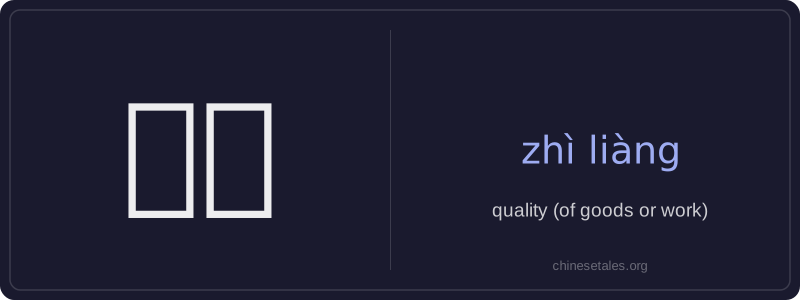
'质量' (zhì liàng) is a compound noun meaning 'quality'—specifically the degree of excellence, reliability, or fitness for purpose of a product, service, or piece of work. The first character 质 (zhì) means 'substance', 'nature', or 'essence', while the second character 量 (liàng) means 'quantity' or 'measure'. Together, they convey the idea of 'measuring the essential nature'—i.e., how well something fulfills its intended function or meets standards.
This term is widely used in business, manufacturing, education, and healthcare contexts—for example, when evaluating medical care, software performance, or food safety. It’s neutral in register and appears frequently in formal reports, advertisements ('high-quality products'), and everyday feedback ('The quality has declined'). Unlike '品质' (pǐn zhì), which emphasizes inherent moral or aesthetic value, '质量' focuses more on objective, measurable standards and functional performance.
Example Sentences
Related Words
国语
‘Guó yǔ’ literally means 'national language'—
面条
‘面条’ (miàn tiáo) literally means ‘flour str
无论谁
‘无论谁’ (wú lùn shéi) is a pronoun meaning
不对
不对 (bù duì) literally combines 不 (bù), meani
外语
‘外语’ literally means ‘outside language’ —
认同
‘认同’ (tóng rèn) is a verb meaning ‘to ident
中学
'Zhōngxué' literally combines 'zhōng' (middle)
背后
背后 literally means 'back + behind' and functions