Word Explanation
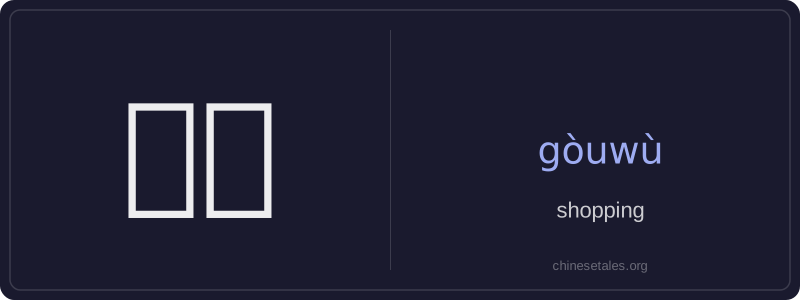
购物 (gòuwù) literally combines 购 (to purchase) and 物 (thing, object), meaning 'the act of buying things' — in English, simply 'shopping'. It functions both as a noun ('I love shopping') and as a verb ('We’re going shopping'). Unlike English, Chinese doesn’t require an auxiliary verb like 'go' before 购物; it can stand alone or follow verbs like 去 (qù, to go), 来 (lái, to come), or 在 (zài, to be doing). It’s neutral in register — appropriate for casual conversation, advertisements, and formal contexts alike.
This word is most commonly used for everyday consumer activities: buying clothes, groceries, electronics, or gifts. It does not refer to wholesale or business procurement (which uses 采购 cǎigòu); nor does it imply browsing without buying (that’s 逛 guàng, as in 逛街). While often associated with malls or online platforms, 购物 carries no inherent location or method — context clarifies whether it’s online, in-store, or even secondhand.
Example Sentences
Related Words
国语
‘Guó yǔ’ literally means 'national language'—
面条
‘面条’ (miàn tiáo) literally means ‘flour str
无论谁
‘无论谁’ (wú lùn shéi) is a pronoun meaning
不对
不对 (bù duì) literally combines 不 (bù), meani
外语
‘外语’ literally means ‘outside language’ —
认同
‘认同’ (tóng rèn) is a verb meaning ‘to ident
中学
'Zhōngxué' literally combines 'zhōng' (middle)
背后
背后 literally means 'back + behind' and functions