Word Explanation
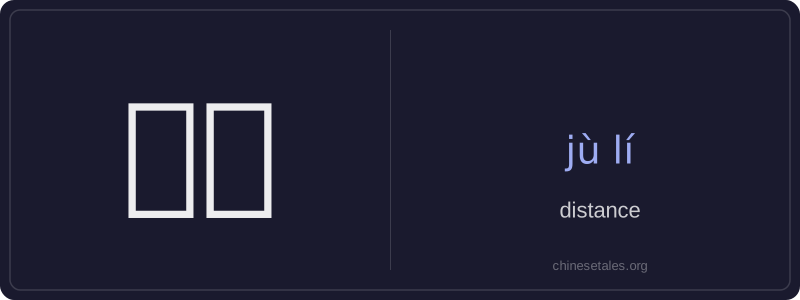
距离 (jù lí) is a noun meaning 'distance' — the measurable space between two points, places, people, or things. It combines 距 (jù), which historically means 'to separate' or 'to keep apart', and 离 (lí), meaning 'to depart', 'to separate', or 'to be apart'. Together, they emphasize the idea of spatial or conceptual separation. This word is used in both literal contexts — like measuring kilometers between cities — and figurative ones, such as emotional or social distance.
距离 appears frequently in everyday speech, maps, transportation announcements, science, and even psychology. It’s neutral in register and works in formal and informal settings. Unlike colloquial alternatives like ‘远近’ (yuǎn jìn), 距离 is precise and quantifiable — you can say ‘五公里的距离’ (a distance of five kilometers) but not ‘*五公里的远近’. It often follows measure words or appears after verbs like ‘缩短’ (to shorten) or ‘增加’ (to increase).
Example Sentences
Related Words
国语
‘Guó yǔ’ literally means 'national language'—
面条
‘面条’ (miàn tiáo) literally means ‘flour str
无论谁
‘无论谁’ (wú lùn shéi) is a pronoun meaning
不对
不对 (bù duì) literally combines 不 (bù), meani
外语
‘外语’ literally means ‘outside language’ —
认同
‘认同’ (tóng rèn) is a verb meaning ‘to ident
中学
'Zhōngxué' literally combines 'zhōng' (middle)
背后
背后 literally means 'back + behind' and functions