Word Explanation
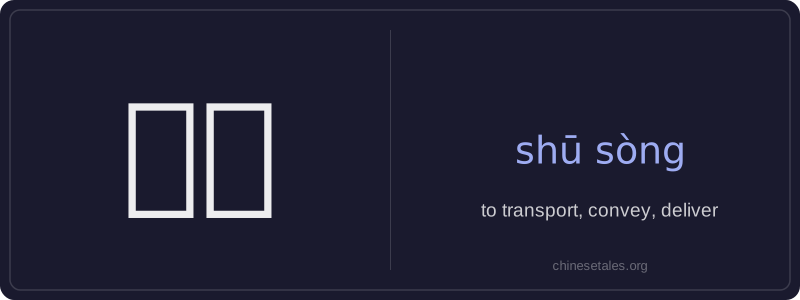
输送 (shū sòng) is a transitive verb meaning 'to transport', 'to convey', or 'to deliver'—especially over distance or through a system. The first character 输 (shū) means 'to transport' or 'to transmit', often implying movement via infrastructure (e.g., pipelines, blood vessels, or logistics networks); the second character 送 (sòng) means 'to send' or 'to deliver', adding directionality and purpose. Together, they emphasize systematic, often continuous or large-scale movement of people, goods, fluids, or signals.
This word is commonly used in formal, technical, or institutional contexts: medical (e.g., blood circulation), engineering (e.g., water or gas pipelines), logistics (e.g., cargo distribution), and even abstract domains like data transmission. It’s rarely used for casual, one-off hand-deliveries—that’s more appropriately expressed with 送 (sòng) alone. 输送 carries a neutral-to-formal register and frequently appears in compound nouns like 输送带 (conveyor belt) or 输送系统 (transportation system).
Example Sentences
Related Words
国语
‘Guó yǔ’ literally means 'national language'—
面条
‘面条’ (miàn tiáo) literally means ‘flour str
无论谁
‘无论谁’ (wú lùn shéi) is a pronoun meaning
不对
不对 (bù duì) literally combines 不 (bù), meani
外语
‘外语’ literally means ‘outside language’ —
认同
‘认同’ (tóng rèn) is a verb meaning ‘to ident
中学
'Zhōngxué' literally combines 'zhōng' (middle)
背后
背后 literally means 'back + behind' and functions