Word Explanation
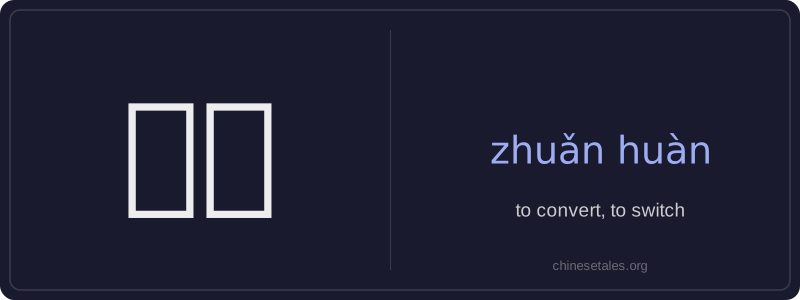
转换 (zhuǎn huàn) is a verb meaning 'to convert' or 'to switch'—it describes the act of changing something from one form, state, system, or function to another. The character 转 (zhuǎn) means 'to turn', 'to rotate', or 'to shift', while 换 (huàn) means 'to exchange' or 'to replace'. Together, they emphasize a purposeful, often functional transformation—not just physical movement but a change in nature, format, or role. It’s commonly used in technical, digital, linguistic, and administrative contexts: converting file formats, switching languages, transforming energy, or changing job responsibilities.
The word is neutral in register and frequently appears in both spoken and written Chinese, especially in formal or professional settings. It can take objects directly (e.g., 转换格式), and is often paired with measure words like '一下' for softening (e.g., 请转换一下思路). Unlike some verbs, it doesn’t require aspect particles like 了 or 过 unless tense or completion is specifically indicated. Its compound structure makes it more precise than single-character synonyms like 换 or 改, which are broader or less technical.
Example Sentences
Related Words
国语
‘Guó yǔ’ literally means 'national language'—
面条
‘面条’ (miàn tiáo) literally means ‘flour str
无论谁
‘无论谁’ (wú lùn shéi) is a pronoun meaning
不对
不对 (bù duì) literally combines 不 (bù), meani
外语
‘外语’ literally means ‘outside language’ —
认同
‘认同’ (tóng rèn) is a verb meaning ‘to ident
中学
'Zhōngxué' literally combines 'zhōng' (middle)
背后
背后 literally means 'back + behind' and functions