Word Explanation
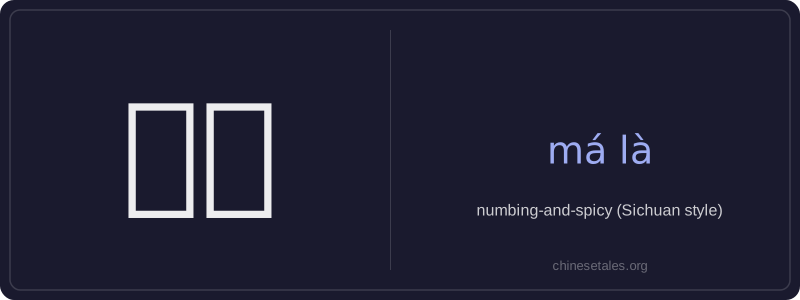
‘Málà’ (麻辣) is an iconic Chinese compound adjective describing the distinctive dual sensation of ‘numbing’ (from Sichuan peppercorns) and ‘spicy heat’ (from chili peppers). The character 麻 (má) refers specifically to the tingling, mouth-numbing effect—not general numbness—and 辣 (là) means pungent spiciness, not just hot temperature. Together, they form a sensory descriptor deeply tied to Sichuan cuisine and regional food culture.
This term functions as a unified flavor profile, often used attributively before nouns (e.g., 麻辣火锅, málà huǒguō — ‘numbing-and-spicy hotpot’) or predicatively (e.g., 这菜很麻辣, zhè cài hěn málà — ‘This dish is numbing-and-spicy’). It’s rarely split; saying *‘má hé là’* (‘má and là’) loses the cultural and culinary specificity. While rooted in food, 麻辣 occasionally appears metaphorically—e.g., describing a bold, intense personality—but such uses remain rare and stylistically marked.
Example Sentences
Related Words
国语
‘Guó yǔ’ literally means 'national language'—
面条
‘面条’ (miàn tiáo) literally means ‘flour str
无论谁
‘无论谁’ (wú lùn shéi) is a pronoun meaning
不对
不对 (bù duì) literally combines 不 (bù), meani
外语
‘外语’ literally means ‘outside language’ —
认同
‘认同’ (tóng rèn) is a verb meaning ‘to ident
中学
'Zhōngxué' literally combines 'zhōng' (middle)
背后
背后 literally means 'back + behind' and functions