Word Explanation
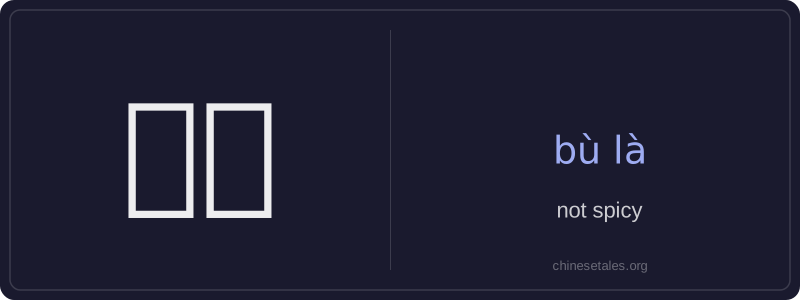
‘不辣’ (bù là) literally means ‘not spicy’ and functions as a descriptive adjective indicating the absence of spiciness in food. The first character, 不 (bù), is the standard negation particle used before adjectives and verbs; the second, 辣 (là), means ‘spicy’ or ‘pungent’, referring specifically to the burning sensation caused by chili peppers or other hot spices. Together, they form a simple, commonly used phrase in everyday dining contexts — especially when ordering food in restaurants or describing personal taste preferences.
This term appears frequently on menus, in casual speech, and in food packaging to signal mildness. Unlike more formal alternatives like ‘微辣’ (wēi là, ‘mildly spicy’) or ‘清汤’ (qīng tāng, ‘clear broth’), ‘不辣’ is neutral, direct, and universally understood across Mandarin-speaking regions. It’s often paired with nouns (e.g., ‘不辣的菜’) or used predicatively (e.g., ‘这道菜不辣’), and never stands alone as a noun or verb.
Example Sentences
Related Words
国语
‘Guó yǔ’ literally means 'national language'—
面条
‘面条’ (miàn tiáo) literally means ‘flour str
无论谁
‘无论谁’ (wú lùn shéi) is a pronoun meaning
不对
不对 (bù duì) literally combines 不 (bù), meani
外语
‘外语’ literally means ‘outside language’ —
认同
‘认同’ (tóng rèn) is a verb meaning ‘to ident
中学
'Zhōngxué' literally combines 'zhōng' (middle)
背后
背后 literally means 'back + behind' and functions