Word Explanation
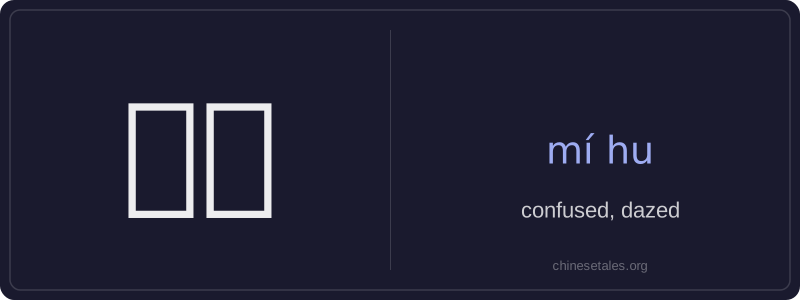
迷糊 (mí hu) is an adjective meaning 'confused', 'dazed', or 'mentally foggy'. The character 迷 (mí) means 'to be lost' or 'bewildered', often implying a lack of clear direction or understanding; 糊 (hú) literally means 'paste' or 'porridge', but in compounds like this it conveys a sense of 'blurred', 'indistinct', or 'muddled' — as if one’s thoughts are thick and hard to sort out. Together, 迷糊 evokes the feeling of mental cloudiness, like waking up groggy or struggling to focus after fatigue or illness.
This word is commonly used in informal spoken Chinese to describe temporary states of confusion or reduced alertness — not clinical impairment, but everyday mental fogginess. It’s frequently heard in contexts involving sleepiness, distraction, illness (e.g., fever), or information overload. While it can occasionally function as a verb (e.g., 他迷糊了), its primary use is adjectival, typically following a subject with 是 or 很, or appearing in predicative position after verbs like 感觉 or 显得.
Example Sentences
Related Words
国语
‘Guó yǔ’ literally means 'national language'—
面条
‘面条’ (miàn tiáo) literally means ‘flour str
无论谁
‘无论谁’ (wú lùn shéi) is a pronoun meaning
不对
不对 (bù duì) literally combines 不 (bù), meani
外语
‘外语’ literally means ‘outside language’ —
认同
‘认同’ (tóng rèn) is a verb meaning ‘to ident
中学
'Zhōngxué' literally combines 'zhōng' (middle)
背后
背后 literally means 'back + behind' and functions