Word Explanation
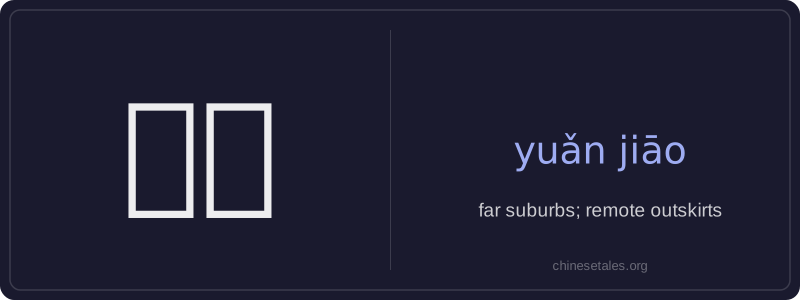
‘远郊’ literally combines ‘远’ (yuǎn), meaning ‘far’ or ‘distant’, and ‘郊’ (jiāo), meaning ‘suburbs’ or ‘outskirts’. Together, it refers specifically to the more remote, less developed areas on the periphery of a city — beyond the inner and middle suburbs — often characterized by low population density, farmland, forests, or small villages. Unlike the general term ‘郊区’ (suburbs), ‘远郊’ emphasizes distance and relative isolation from urban centers.
This word is commonly used in geographical descriptions, urban planning discussions, transportation contexts (e.g., bus routes to the far suburbs), and lifestyle comparisons (e.g., commuting time, housing affordability). It carries a neutral-to-slightly formal register and appears frequently in news reports, real estate listings, and policy documents about regional development. While ‘郊’ alone can imply proximity to a city, adding ‘远’ shifts the focus to remoteness — making ‘远郊’ distinct from ‘近郊’ (near suburbs) both geographically and functionally.
Example Sentences
Related Words
国语
‘Guó yǔ’ literally means 'national language'—
面条
‘面条’ (miàn tiáo) literally means ‘flour str
无论谁
‘无论谁’ (wú lùn shéi) is a pronoun meaning
不对
不对 (bù duì) literally combines 不 (bù), meani
外语
‘外语’ literally means ‘outside language’ —
认同
‘认同’ (tóng rèn) is a verb meaning ‘to ident
中学
'Zhōngxué' literally combines 'zhōng' (middle)
背后
背后 literally means 'back + behind' and functions