Word Explanation
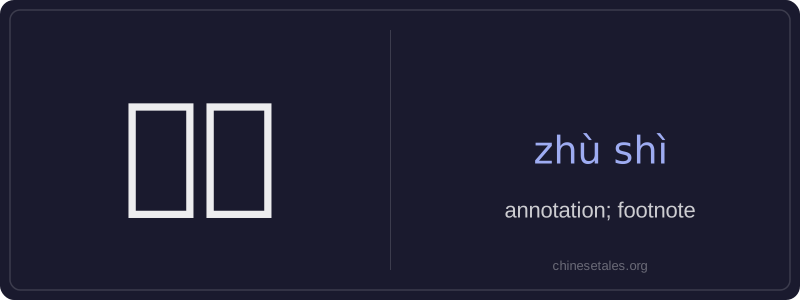
‘注释’ (zhùshì) is a noun meaning 'annotation' or 'footnote' — a brief explanatory note added to clarify text, often found in textbooks, academic papers, or software documentation. The first character 注 (zhù) means 'to note' or 'to record', while 释 (shì) means 'to explain' or 'to interpret'; together, they convey the idea of adding explanatory information to aid understanding.
This word is commonly used in formal, academic, or technical contexts — for example, when teachers add notes to students’ essays, editors insert clarifications in published works, or programmers write comments in code. It implies purposeful, written clarification rather than spoken explanation. While similar to ‘说明’ (explanation), ‘注释’ specifically refers to supplementary written material placed alongside or beneath main content — often numbered or marked with symbols like asterisks or superscripts.
Example Sentences
Related Words
国语
‘Guó yǔ’ literally means 'national language'—
面条
‘面条’ (miàn tiáo) literally means ‘flour str
无论谁
‘无论谁’ (wú lùn shéi) is a pronoun meaning
不对
不对 (bù duì) literally combines 不 (bù), meani
外语
‘外语’ literally means ‘outside language’ —
认同
‘认同’ (tóng rèn) is a verb meaning ‘to ident
中学
'Zhōngxué' literally combines 'zhōng' (middle)
背后
背后 literally means 'back + behind' and functions