Word Explanation
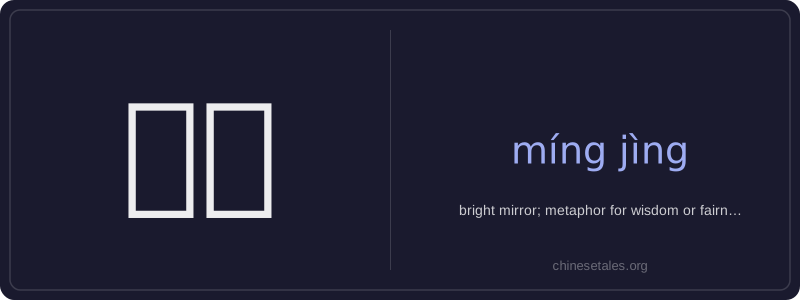
‘Míng jìng’ literally means ‘bright mirror’—combining 明 (míng), meaning ‘bright’ or ‘clear’, and 镜 (jìng), meaning ‘mirror’. Historically, a polished bronze or glass mirror symbolized clarity, truth, and impartial observation. In classical and modern Chinese, it’s used metaphorically to describe wisdom that reflects reality without distortion, or fairness that sees all sides equally—often in moral, philosophical, or literary contexts.
The term appears frequently in idioms (e.g., ‘明镜高悬’, míng jìng gāo xuán, ‘a bright mirror hangs high’—signifying upright justice) and formal writing. It’s rarely used to refer to an actual physical mirror in everyday speech; for that, people say 镜子 (jìngzi). Instead, 明镜 carries elevated, almost poetic weight—evoking self-reflection, moral insight, or an ideal standard of objectivity.
Example Sentences
Related Words
国语
‘Guó yǔ’ literally means 'national language'—
面条
‘面条’ (miàn tiáo) literally means ‘flour str
无论谁
‘无论谁’ (wú lùn shéi) is a pronoun meaning
不对
不对 (bù duì) literally combines 不 (bù), meani
外语
‘外语’ literally means ‘outside language’ —
认同
‘认同’ (tóng rèn) is a verb meaning ‘to ident
中学
'Zhōngxué' literally combines 'zhōng' (middle)
背后
背后 literally means 'back + behind' and functions