Word Explanation
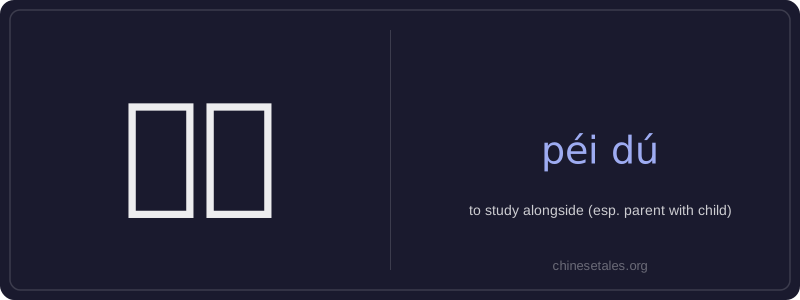
'Péi dú' literally means 'to accompany + to read/study' and refers specifically to the practice of a parent (most commonly the mother) sitting with their child during study time—helping, supervising, or simply being present to support learning. It reflects a deeply rooted cultural emphasis on parental involvement in education, especially in preparation for high-stakes exams like the Zhongkao or Gaokao. While originally associated with reading aloud or homework help, the term now broadly covers academic supervision across subjects and grade levels.
The word carries strong social and emotional connotations: it implies sacrifice (e.g., mothers quitting jobs), dedication, and sometimes pressure or over-involvement. It is rarely used for peer or self-directed study—it almost always implies an adult accompanying a younger learner. In recent years, 'péi dú' has also extended metaphorically to describe educational support roles in tutoring centers or online platforms, though the core meaning remains parent-child academic companionship.
Example Sentences
Related Words
国语
‘Guó yǔ’ literally means 'national language'—
面条
‘面条’ (miàn tiáo) literally means ‘flour str
无论谁
‘无论谁’ (wú lùn shéi) is a pronoun meaning
不对
不对 (bù duì) literally combines 不 (bù), meani
外语
‘外语’ literally means ‘outside language’ —
认同
‘认同’ (tóng rèn) is a verb meaning ‘to ident
中学
'Zhōngxué' literally combines 'zhōng' (middle)
背后
背后 literally means 'back + behind' and functions