Word Explanation
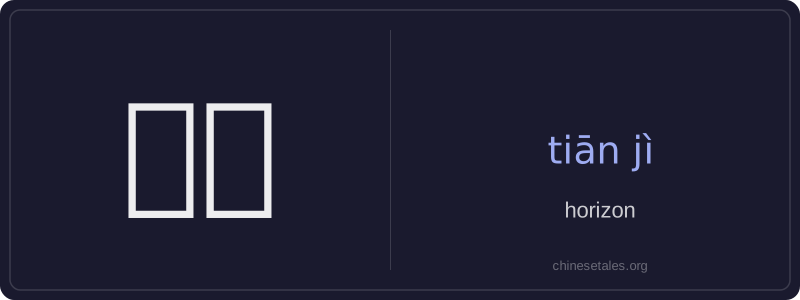
天际 literally combines 天 (tiān, 'sky' or 'heaven') and 际 (jì, 'boundary' or 'edge'), meaning the visible line where the earth (or sea) appears to meet the sky — the horizon. It is a poetic, slightly literary term often used in descriptive writing, landscape painting, travel narratives, and photography to evoke vastness, openness, or distance.
Unlike the more neutral and everyday word 地平线 (dìpíngxiàn), 天际 carries a subtle aesthetic or emotional weight — it’s frequently found in poetry, song lyrics, or evocative prose describing sunrises, sunsets, deserts, oceans, or mountain vistas. It rarely appears in casual spoken Chinese or technical contexts like navigation or meteorology, where precise terminology is preferred.
Example Sentences
Related Words
国语
‘Guó yǔ’ literally means 'national language'—
面条
‘面条’ (miàn tiáo) literally means ‘flour str
无论谁
‘无论谁’ (wú lùn shéi) is a pronoun meaning
不对
不对 (bù duì) literally combines 不 (bù), meani
外语
‘外语’ literally means ‘outside language’ —
认同
‘认同’ (tóng rèn) is a verb meaning ‘to ident
中学
'Zhōngxué' literally combines 'zhōng' (middle)
背后
背后 literally means 'back + behind' and functions