Word Explanation
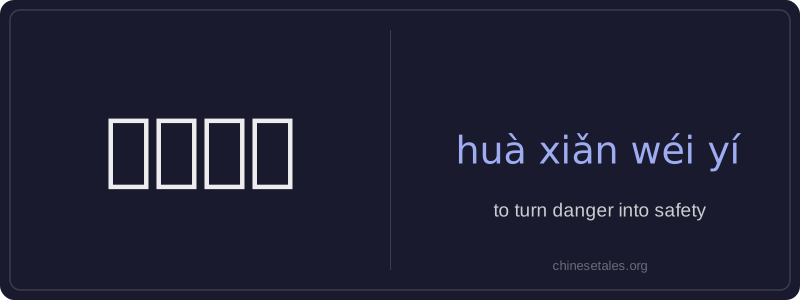
‘化险为夷’ is a classical four-character idiom meaning 'to turn danger into safety' or 'to avert disaster and restore calm.' Literally, 化 (huà) means 'to transform,' 险 (xiǎn) means 'danger' or 'peril,' 为 (wéi) means 'to become,' and 夷 (yí) means 'peace,' 'calm,' or 'level ground'—here used metaphorically for safety and stability. Together, the phrase vividly conveys the idea of skillfully resolving a crisis and emerging unharmed.
This idiom is commonly used in formal writing, news reports, speeches, and literary contexts to describe successful crisis management—whether in emergencies like natural disasters or accidents, or in high-stakes negotiations and personal challenges. It carries a positive, commendatory tone and often implies wisdom, courage, or timely intervention. While it sounds elegant and slightly literary, it’s widely understood and occasionally appears in spoken Chinese when emphasizing relief after serious risk.
Example Sentences
Related Words
国语
‘Guó yǔ’ literally means 'national language'—
面条
‘面条’ (miàn tiáo) literally means ‘flour str
无论谁
‘无论谁’ (wú lùn shéi) is a pronoun meaning
不对
不对 (bù duì) literally combines 不 (bù), meani
外语
‘外语’ literally means ‘outside language’ —
认同
‘认同’ (tóng rèn) is a verb meaning ‘to ident
中学
'Zhōngxué' literally combines 'zhōng' (middle)
背后
背后 literally means 'back + behind' and functions