Word Explanation
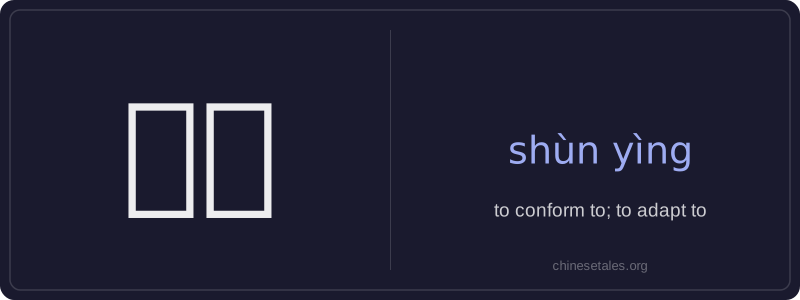
‘顺应’ is a verb meaning 'to conform to' or 'to adapt to'—especially in response to natural laws, changing circumstances, or external conditions. The first character 顺 (shùn) means 'to follow smoothly' or 'to comply willingly', while the second character 应 (yìng) means 'to respond' or 'to react appropriately'. Together, they convey a sense of active, harmonious adjustment—not passive submission, but thoughtful alignment with reality.
This word appears frequently in ecological, agricultural, and traditional Chinese philosophical contexts—for example, when describing how animals instinctively adjust their behavior to seasonal shifts, or how humans should align farming practices with natural cycles. It carries a positive, respectful connotation: adapting not out of weakness, but as a sign of wisdom and attunement to larger patterns. It’s commonly used in formal writing, policy documents, and discussions about sustainability or animal welfare.
Example Sentences
Related Words
国语
‘Guó yǔ’ literally means 'national language'—
面条
‘面条’ (miàn tiáo) literally means ‘flour str
无论谁
‘无论谁’ (wú lùn shéi) is a pronoun meaning
不对
不对 (bù duì) literally combines 不 (bù), meani
外语
‘外语’ literally means ‘outside language’ —
认同
‘认同’ (tóng rèn) is a verb meaning ‘to ident
中学
'Zhōngxué' literally combines 'zhōng' (middle)
背后
背后 literally means 'back + behind' and functions