Word Explanation
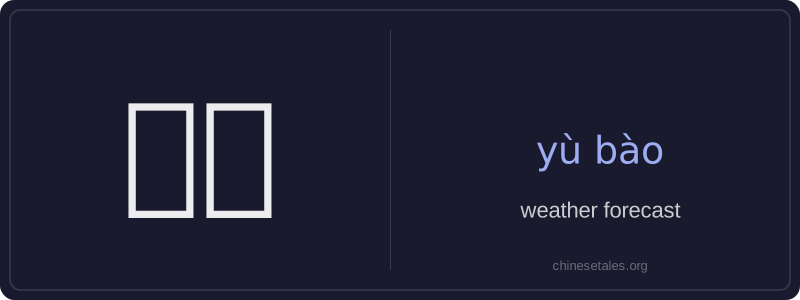
预报 (yù bào) literally means 'pre-report' — 预 (yù) means 'in advance' or 'beforehand', and 报 (bào) means 'to report' or 'to announce'. Together, they form a noun meaning 'forecast', most commonly used for weather forecasts but also applicable to other types of predictions (e.g., economic or earthquake forecasts). In everyday speech, however, 预报 almost always refers to weather forecasts unless specified otherwise by context or a modifier (e.g., 经济预报 'economic forecast').
The word is neutral in register and widely used across media, apps, and conversation. It frequently appears in compound nouns like 天气预报 (tiānqì yùbào, 'weather forecast') or 暴雨预报 (bàoyǔ yùbào, 'heavy rain forecast'). Unlike the verb 报告 (bàogào, 'to report'), 预报 is exclusively a noun and does not function as a verb in modern standard Chinese.
Example Sentences
Related Words
国语
‘Guó yǔ’ literally means 'national language'—
面条
‘面条’ (miàn tiáo) literally means ‘flour str
无论谁
‘无论谁’ (wú lùn shéi) is a pronoun meaning
不对
不对 (bù duì) literally combines 不 (bù), meani
外语
‘外语’ literally means ‘outside language’ —
认同
‘认同’ (tóng rèn) is a verb meaning ‘to ident
中学
'Zhōngxué' literally combines 'zhōng' (middle)
背后
背后 literally means 'back + behind' and functions