Word Explanation
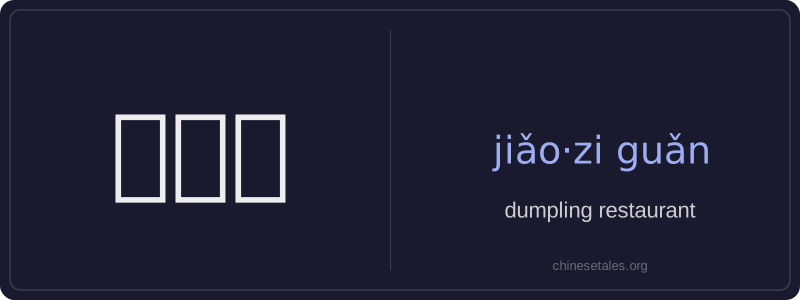
‘饺子馆’ (jiǎo·zi guǎn) literally means 'dumpling shop' or 'dumpling restaurant' — it’s a compound noun where 饺子 (jiǎo·zi) means 'dumpling' and 馆 (guǎn) is a suffix meaning 'establishment' or 'hall', commonly used for specialized eateries (e.g., 茶馆 cháguǎn 'tea house', 面馆 miànguǎn 'noodle restaurant'). Unlike generic terms like 餐厅 (cāntīng, 'restaurant'), 饺子馆 specifically signals that dumplings are the main offering — often handmade, served boiled, steamed, or pan-fried, and sometimes with regional variations (e.g., Northeastern or Cantonese styles).
These restaurants are common across China and increasingly found overseas in Chinatowns. They range from casual street-side stalls to family-run sit-down venues, frequently serving complementary dishes like soups, cold appetizers, or beer — but dumplings remain the star. The term carries warm, homestyle connotations and is often associated with festivals (especially Spring Festival), family gatherings, or comfort food.
Example Sentences
Related Words
国语
‘Guó yǔ’ literally means 'national language'—
面条
‘面条’ (miàn tiáo) literally means ‘flour str
无论谁
‘无论谁’ (wú lùn shéi) is a pronoun meaning
不对
不对 (bù duì) literally combines 不 (bù), meani
外语
‘外语’ literally means ‘outside language’ —
认同
‘认同’ (tóng rèn) is a verb meaning ‘to ident
中学
'Zhōngxué' literally combines 'zhōng' (middle)
背后
背后 literally means 'back + behind' and functions