Word Explanation
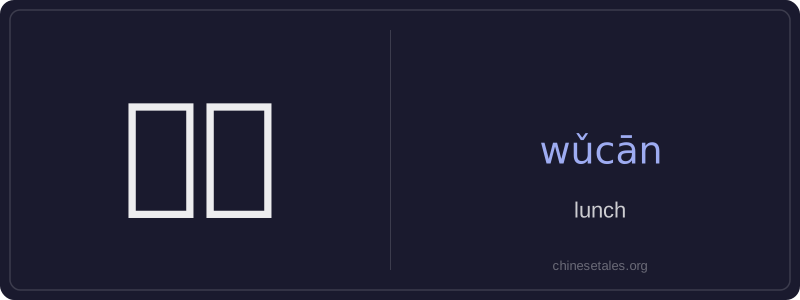
午餐 (wǔcān) literally combines 午 (wǔ), meaning 'noon' or 'midday', and 餐 (cān), meaning 'meal'. Together, they form the standard term for the midday meal — lunch — in Mandarin Chinese. It is a neutral, formal-to-colloquial noun used widely across all registers, from school menus to business meetings.
This word is commonly used in daily planning, restaurant ordering, and time-related expressions (e.g., 午餐时间 wǔcān shíjiān — 'lunchtime'). Unlike more casual alternatives like 午饭 (wǔfàn), 午餐 sounds slightly more refined or institutional — you’ll see it on office schedules, university cafeterias, and official notices. It’s also frequently paired with time markers (e.g., 吃午餐 chī wǔcān — 'to eat lunch') or modifiers indicating type (e.g., 自助午餐 zìzhù wǔcān — 'buffet lunch').
Example Sentences
Related Words
国语
‘Guó yǔ’ literally means 'national language'—
面条
‘面条’ (miàn tiáo) literally means ‘flour str
无论谁
‘无论谁’ (wú lùn shéi) is a pronoun meaning
不对
不对 (bù duì) literally combines 不 (bù), meani
外语
‘外语’ literally means ‘outside language’ —
认同
‘认同’ (tóng rèn) is a verb meaning ‘to ident
中学
'Zhōngxué' literally combines 'zhōng' (middle)
背后
背后 literally means 'back + behind' and functions