Word Explanation
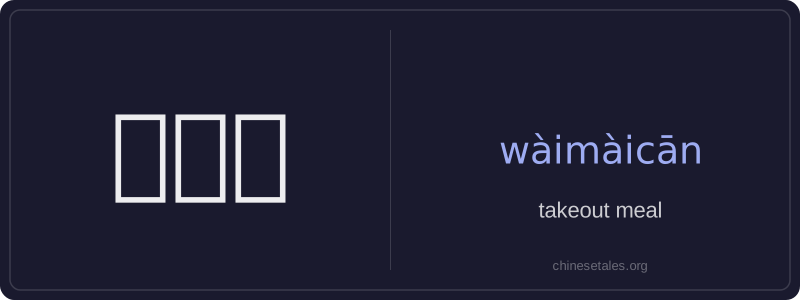
'Wàimàicān' literally combines three characters: 'wài' (outside), 'mài' (to sell), and 'cān' (meal or food). Together, they describe food that is ordered from a restaurant or vendor and delivered to the customer’s location—or picked up—rather than eaten on-site. This term reflects China’s fast-paced urban lifestyle and the widespread use of food delivery apps like Meituan and Ele.me.
The word is commonly used in everyday conversation, especially among young adults and office workers. It’s neutral in register and appears frequently in contexts involving convenience, time-saving, or dining preferences. While 'wàimài' alone often means 'takeout' (as a noun or verb), adding 'cān' emphasizes the meal itself—making it more specific than just 'takeout service' and closer to 'a takeout meal' or 'takeout food' as a countable item.
Example Sentences
Related Words
国语
‘Guó yǔ’ literally means 'national language'—
面条
‘面条’ (miàn tiáo) literally means ‘flour str
无论谁
‘无论谁’ (wú lùn shéi) is a pronoun meaning
不对
不对 (bù duì) literally combines 不 (bù), meani
外语
‘外语’ literally means ‘outside language’ —
认同
‘认同’ (tóng rèn) is a verb meaning ‘to ident
中学
'Zhōngxué' literally combines 'zhōng' (middle)
背后
背后 literally means 'back + behind' and functions